Reviewing interior design costs today often reveals that home decor wholesale pricing is not as straightforward as expected, especially when additional fees and material shifts are factored in. Many homeowners assume trade access will significantly reduce expenses, but shipping costs, markups, and supply constraints can quickly offset those savings. As a result, more people are exploring affordable interior design materials that offer the same visual appeal without the high price tag. Understanding how pricing structures work and how newer material innovations are changing the market can help you make more informed decisions. With costs continuing to evolve in 2026, having a clear strategy is essential before committing to any large design project.
The Hidden Reality of Wholesale Interior Decor Markups
You might think that hiring a professional gives you a direct line to factory prices, but the financial structure of the industry is more complex than a simple pass-through. Interior designers typically apply a markup of 17% to 45% on wholesale furnishings before they reach your living room3. This means the "trade price" you see on a spec sheet is rarely the price you actually pay. When you add hourly fees that can reach $395 per hour in high-demand areas like Laguna Beach, the savings you expected from the wholesale route can vanish quickly8. Our research team noted that this markup often covers the designer's time spent sourcing and managing logistics, yet it remains a point of frustration for many homeowners.
The cost of these projects has climbed 172% in just three years according to data from HomeAdvisor and Forbes1. You are paying more for the same service because the demand for professional guidance has spiked while the supply of quality materials has remained tight. In 2021, the average project cost was $5,406, but that figure is projected to hit $6,200 by 2025.1 This 15% rise happens even as technology makes the design process more efficient. You are essentially paying for the privilege of access to a market that remains largely closed to the general public. Many people feel a sense of frustration when they see a designer apply a 30% markup to an item they could have found online for the same price.
Budgets often collapse in the space between what you expect and what actually happens. Starting with a $5,000 budget might lead to a shock when you see that Nashville project minimums can hit $250,000.8 Designers in Florida often accept $30,000 minimums, offering a reprieve compared to higher coastal rates. Before signing a contract that locks you into an unaffordable fee structure, you need to grasp these local standards.
Closing the Texture Gap with Hybrid Material Integration
If the cost of solid wood and natural stone feels out of reach, you are not alone in your search for a better way to build your home. Hybrid material integration is the critical advancement that allows you to get boutique-level textures without the boutique-level price tag. Ayman Mahmoud Obeidat, a researcher at ResearchGate, notes that interfacial engineering is the secret to making these new materials feel like the real thing.9 By combining different substances at a molecular level, manufacturers are creating surfaces that mimic the weight, cool touch, and grain of natural materials. You no longer have to settle for cheap-looking plastics when you want to save money on your renovation.
The "Carbon Crystal" revolution is a prime example of this shift in the market. Bamboo charcoal panels are now available on wholesale markets for under $6 per square meter - a price that stands in stark contrast to natural marble which can cost 20 to 50 times that amount. From just three feet away, these durable, high-gloss surfaces appear identical to natural stone. Durability is just as important as cost in this hybrid strategy. Unlike marble, these panels resist cracking and skip the constant sealing required for natural stone.
The global market for bamboo furniture - a key component of the hybrid movement - is projected to reach $16.3 billion by 2030.2 This is not a small trend. The wide adoption of these materials stems from their ability to bridge the texture gap between luxury and budget homes. Visual gaps between natural wood and high-end synthetics essentially vanished by 2024. Running your hand across a hybrid floor now reveals the same warmth and ridges found in solid oak. This technological leap allows you to allocate your budget to things you touch every day while saving on the surfaces that just need to look good.
Why Your Zip Code Dictates the Boutique-Level Textures Budget
Where you live has a bigger impact on your project than the style of furniture you choose. The price spread between a national low-end design rate of $5 per square foot and the $30 commercial high-end rate shows how aesthetic choices change based on your local economy.5 If you are in a high-cost area, you are not just paying for the materials; you are paying for the overhead of the professionals you hire. You might find that a principal designer in Laguna Beach charges 2.6 times the national average.8 This means your $10,000 budget buys far less help in California than it would in the Midwest.
Consider the minimum project budgets that vary wildly across the country. In Nashville, some firms will not even open a file for less than $250,000, while Florida firms often start at a more accessible $30,0008. You have to handle these regional gatekeepers to find a service that fits your financial reality. If you are working with a smaller budget, you might need to look for flat-fee models that are disrupting the traditional 45% markup cycle. These models allow you to pay for the expertise without the hidden costs that usually come with wholesale interior decor. You get the plan, and you handle the purchasing yourself to avoid the extra fees.
The cost of your project - roughly $6,200 for a standard room by 2025 - is a moving target that requires constant monitoring1. You cannot assume that a quote you received last year will hold up in today's market. Demand for sustainable practices is pushing fees up by 3% to 5% annually.10 Zak Lisetsky, a principal designer at Arsight Studio, points out that this increase is driven by the need for more complex material sourcing. You are paying for the research required to find those hybrid materials that meet your quality standards. The trade-off requires you to be more involved in the details of your project than ever before.
Handling the Hidden Pitfalls of Wholesale Interior Decor
The 'major online retailer quality pitfall' is a common theme in homeowner circles where people feel misled by high-end labels on wholesale sites. You might see a table described as "solid wood" only to have it arrive with a core made of medium-density fiberboard or MDF. These MDF cores - a material that lacks the weight and longevity of real wood - often lead to furniture that warps or chips within a year of use. You are essentially paying wholesale prices for retail-grade junk if you do not know how to read the fine print on a manufacturer's spec sheet. You have to be cynical about descriptions that sound too good to be true for the price.
Many homeowners are also frustrated by the designer licensing barrier that keeps trade pricing locked away. You might find that the "exclusive" pricing promised by a professional is not as exclusive as it seems. In some cases, the designer's markup makes the final price higher than what you would pay at a boutique retail store. You are paying for the convenience of their selection, but you are not always getting a deal. This breakdown of the traditional trade-only model is leading more people to seek out direct-to-consumer hybrid options that cut out the middleman entirely. You have to ask yourself if the professional's discount is actually reaching your wallet.
The spread between $2,000 and $16,300,000,000 is not just a range of project costs - it is the gap between a single room refresh and the entire global market for hybrid materials.1,2 Choosing the wrong bamboo charcoal material might result in panels that fail under bathroom humidity. Testing for specific environments is vital before you commit to a hybrid material for your home. Do not trust a wholesale catalog without seeing a physical sample first. You need to touch the texture yourself before you commit thousands of dollars to a shipment that cannot be easily returned.
The Rise of Integrated Design-Build Models
To combat rising costs, the industry is moving toward a model that combines design and construction into a single fee. The ThinkLab 2025 Benchmark Report shows a significant rise in these integrated models.7 Rather than paying separate fees to a designer, contractor, and buyer, you hire one firm for the whole project. Renovation projects stay on track when this level of transparency prevents unexpected fees. You get a clearer picture of your total spend before the work starts.
This shift is also a response to the "stagnation" some people feel when looking at traditional design services. By integrating the build process, firms can better use hybrid material integration to lower their own costs and pass those savings to you. They have the warehouse space and the direct factory links to buy bamboo charcoal and other composites in bulk. You benefit from their scale in a way that an independent designer cannot offer. It is a more industrial approach to interior decor, but it is often the only way to achieve a boutique look on a realistic budget. You are trading the personal touch of a small studio for the efficiency of a larger operation.
The American Society of Interior Designers noted in their 2025 report that consumers are moving away from fast-moving trends toward long-term quality.6 You are likely more interested in a home that will look good for a decade than one that follows a fleeting social media fad. This move toward durability is why hybrid materials are becoming so popular. They offer the look of luxury with a life span that exceeds many natural materials. You are making an investment in your home that should hold its value. If you choose the right integrated firm, they can guide you toward the materials that offer the best return on your investment over the next ten years.
Are Boutique-Level Textures Possible Without Natural Stone?
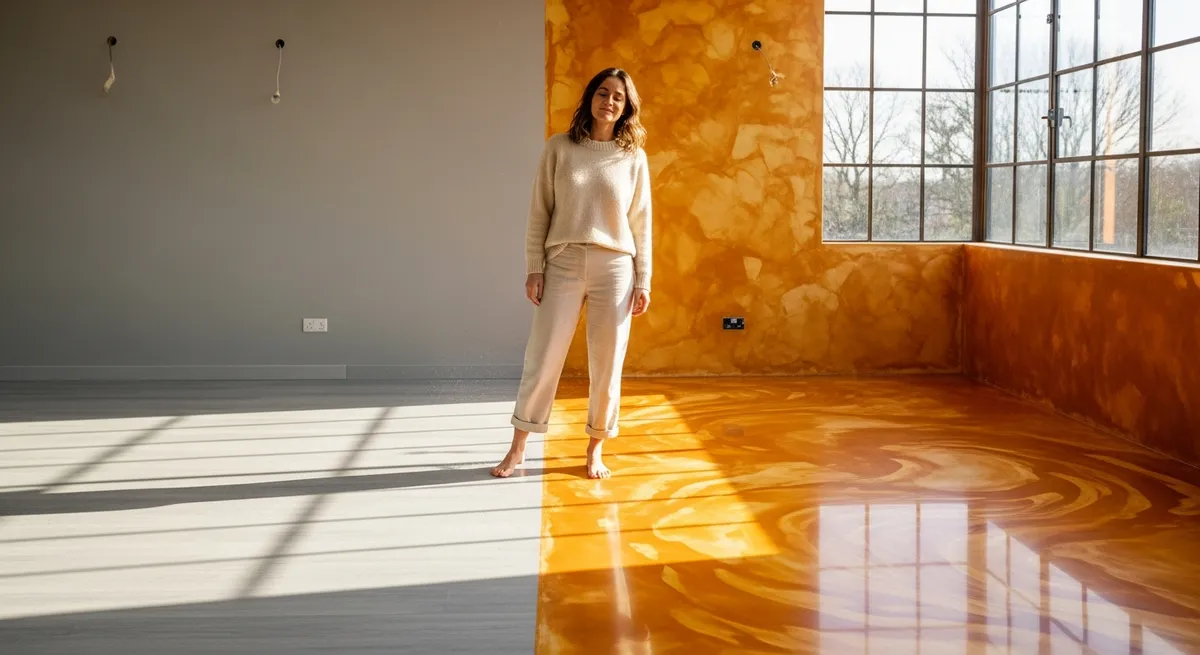
Yes, but you must change your perspective on what constitutes a "real" material. High-gloss finishes on bamboo charcoal panels mimic marble so well that detection requires a magnifying glass. Standard kitchen budgets can now buy the look of a five-star hotel. This is the power of hybrid material integration in the modern market. This is no fake; it is a sophisticated composite built for both performance and beauty. High-end design value is no longer limited to natural materials alone.
Consider the cost difference - marble panels can cost $120 per square foot, while a hybrid alternative might be $610. You can do an entire accent wall for the price of a single natural stone tile. This massive price spread allows you to take risks with your decor that you otherwise could not afford. You can experiment with bold boutique-level textures in your guest room or office without the fear of a massive financial loss if you change your mind in five years. You are gaining freedom in your design by choosing materials that are as affordable as they are beautiful. It is a new way to look at luxury that prioritizes the visual impact over the raw material cost.
New composites are now used in wholesale decor to build rich, layered environments. Options have never been better, from silk-like wall coverings to flooring that captures the cold grain of slate. High-end design is now democratized thanks to this manufacturing revolution. Hybrid options allow you to create a $150,000 look for a fraction of the cost. Success requires looking past standard wholesale labels.
Key Insights
The Bottom Line
The spread between $5,406 and $6,200 is not just noise in the market - it is the range of choices available to you as you handle the changing world of wholesale interior decor. Choosing a flat-fee model and hybrid materials will likely maximize your savings if total cost is your main worry. Expect to pay closer to the $14,700 average if your priority is the specific feel and longevity of natural stone. It comes down to which trade-offs you will accept for your home.
Your next step should be to request physical samples of hybrid materials like carbon crystal or high-end composites before you commit to a full wholesale order. Do not let the 'online retailer pitfall' catch you off guard with inferior MDF cores when you are expecting solid quality. The gap between what you expect and what the data shows is your opportunity to be a smarter consumer. Whether you are in Laguna Beach or Nashville, the power to control your budget lies in your ability to choose the right materials and the right professional model for your home.
Is it possible for a homeowner to buy directly from wholesale decor manufacturers?
Generally, no - most true wholesale manufacturers require a professional design license or a resale certificate to access their catalogs. However, the rise of "direct-to-consumer" brands has bridged this gap by offering trade-like pricing to the general public. You should look for companies that specialize in hybrid material integration as they often have more flexible sales models than traditional high-end furniture houses.
Why are designer fees rising if technology makes the work easier?
Fees are climbing by 3% to 5% annually because the demand for sustainable and ethically sourced materials requires more research and logistics management. You are paying for the designer's ability to handle a broken supply chain and find hybrid materials that actually meet boutique-level standards. It is a service fee for the expertise required to avoid the common quality pitfalls in the wholesale market.
Will a hybrid material actually last as long as natural wood?
Check the density and moisture resistance in the technical specs to be sure. Hybrid materials often outlast natural wood in humid spots because they resist temperature-based expansion. Verify the warranty to protect your investment, even though these products are generally more stable.