Air purifiers for allergy-prone homes often fail to filter microscopic triggers that lead to chronic congestion and respiratory discomfort. This guide shows you how to select certified H13 systems that effectively scrub indoor air and provide lasting relief in 2026.
You likely spend more than 90 percent of your day indoors, and if you are among the millions of people who wake up with a scratchy throat or swollen eyes, the culprit is almost certainly the air you are breathing while you sleep. The problem isn't just dust. This complex mixture of organic matter, chemical residues, and fine particulates was never meant to be processed by your lungs for hours on end. You need a solution that moves beyond simple air movement and into the world of genuine medical-grade filtration.
The Invisible Fine Particle Standard Shift
In early 2024, the EPA slashed the permissible annual level of fine soot and dust by 25 percent to mitigate the risks of lung cancer and heart disease. This changes the game for residential air purifiers for allergy-prone homes. Many older models struggle to keep up with the rigorous air exchange rates that medical professionals now deem necessary for minimizing chronic inflammatory responses. This technical adjustment changes your buying math for 2026. I have tracked these policy shifts for years. You cannot rely on a machine built for 2015 standards to meet the health requirements of today. The EPA, a federal agency headquartered in Washington, D.C. that monitors national environmental health, made this shift because the data on PM2.5 - tiny particles less than 2.5 micrometers in diameter - is increasingly clear about their ability to enter your bloodstream directly through your lung tissue. When you look at the gray plastic casing of a standard department store air cleaner, you aren't seeing the engineering required to tackle these microscopic threats.
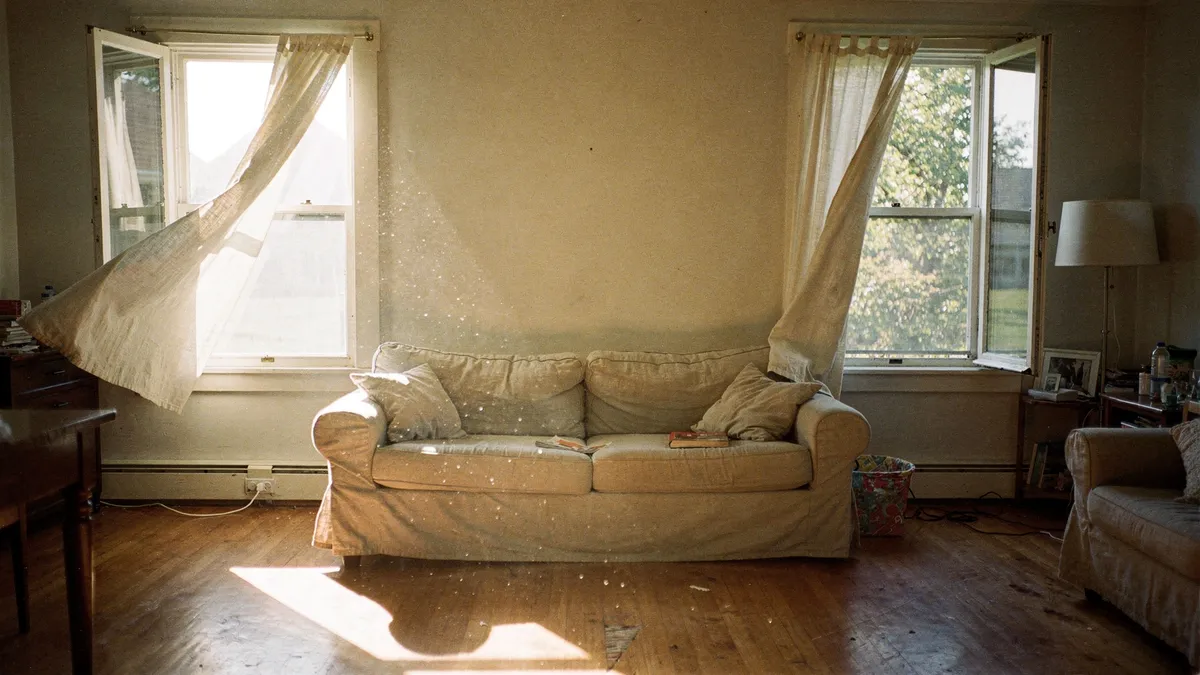
Sunlight streams through a dusty window in a compact studio apartment, illuminating a thick cloud of cat hair and skin cells that swirl around your headboard like a miniature, invisible blizzard. You sneeze twice, hard, while the air feels thick and dead even though that rattling window unit is doing its best in the corner. Six hundred square feet. That is all it takes for allergens to reach a concentration that triggers your immune system. You might think opening a window helps. It doesn't. In fact, doing so often invites more pollen and outdoor pollution into your primary living space, compounding the problem you are trying to solve. You are living in a closed loop, and if that loop doesn't include high-performance filtration, your lungs become the primary filter for every particle in the room.
Why Small Spaces Need Specific Tailoring
Look for H13 medical-grade. These high-density filters - comprised of borosilicate glass fibers or plastic mats - are rated to remove 99.95% of particles down to 0.3 microns. Zero point three microns. That is the size that infiltrates your lungs most easily. This equals roughly 1/30th the diameter of a single human hair. When you shop for air purifiers for allergy-prone homes, you must understand that the density of the filter matters as much as the power of the fan. If the motor is too weak, it cannot pull air through the tight weave of an H13 filter. If the filter is too loose, the dangerous particles simply fly right back out into your room. Maintaining airflow while scrubbing air is a delicate engineering act that cheaper brands often ignore to keep their manufacturing costs low.
CADR ratings for allergies are the next piece of the puzzle you have to solve before swiping your credit card. The Clean Air Delivery Rate, or CADR, measures how many cubic feet of air a machine can scrub of smoke, dust, and pollen every minute. You want a smoke CADR that is at least two-thirds of your room's total square footage. If you have a 300-square-foot bedroom, you should look for a machine with a CADR of at least 200. Anything less than that and the allergens will accumulate faster than the machine can remove them. This leads to a common pitfall where users believe their air is clean because they hear the machine running, even though the particle count in the air remains dangerously high. You are essentially paying for a noisy fan that does nothing to protect your respiratory health. Don't fall for the marketing hype on the box; look for the independent certification seal from the Association of Home Appliance Manufacturers.
Does Your Machine Actually Capture Pollen?
Is your current machine rated for the right square footage? Does it provide enough air changes per hour to satisfy the requirements of the American Lung Association for those with chronic asthma or seasonal sensitivities? High-efficiency particulate air systems must cycle the entire volume of a medium room at least four times every hour to effectively lower the concentration of triggers that settle on furniture and bedding. If you are only getting one or two air changes, the pollen has plenty of time to drift onto your pillow. You wake up congested because the machine was too slow. You need speed. You need volume. The American Lung Association, a non-profit health organization that has been fighting for respiratory health since 1904, suggests that people with severe allergies may even need up to six air changes per hour during peak pollen seasons.
Consider the physical reality of a pollen grain. These grains are sticky, jagged spheres designed by nature to hitch a ride on anything they touch. When pollen enters your home on your clothes or hair, it doesn't just sit in the air waiting to be filtered. It settles into the carpet and the fibers of your couch. To get these particles back into the air where a filter can catch them, you need a machine that creates significant air movement. You are looking for a vortex effect. A high-quality unit will pull air in from the floor level and exhaust it toward the ceiling, creating a rolling current that keeps particles suspended until they are sucked into the H13 medical-grade filtration system. Without this circulation, the machine is only cleaning the three feet of air immediately surrounding the intake vent. You deserve better than a half-measure that leaves the rest of your room full of triggers.
Three Critical Steps for Maintenance Success
The cost of operation is sneaky. Data from Energy Star indicates that certified air purifiers are 40% more energy-efficient than standard models, with annual operating costs typically ranging from $15 to $50 depending on use and local utility rates. This is an expense that often negates any initial savings from buying a cheaper, less efficient model found on a clearance rack. HEPA air cleaner costs should be calculated over a five-year window, not just the day you buy the unit. When you factor in electricity and the price of replacement filters, a $200 machine can often be cheaper than a $99 one. You have to look at the wattage. Some older or cheaper models pull as much power as a small space heater, which can add twenty dollars a month to your utility bill. I have watched this play out in countless homes where the bills start stacking up. In 2026, energy efficiency is no longer an optional luxury; it is a core component of responsible home ownership.
Positioning the unit is the next key. Most people shove their air purifiers for allergy-prone homes into a corner behind a dusty armchair or a heavy velvet curtain where the intake is immediately blocked by fabric. Placing the machine at least three feet away from any walls or furniture - a recommendation found in user manuals from leading environmental health organizations - ensures that the internal fan can create a proper vortex, pulling air from the center of the room where allergens like pet dander and mold spores tend to remain suspended in the air. You should also avoid placing the unit too close to electronic devices that generate their own heat and static, as this can interfere with the way particles move through the room. Your goal is to give the machine a clear line of sight to as much of the room as possible. If you hide it, you are effectively handicapping the very technology you bought to save your health.
Calculating the Real Cost of Breathing Easier
The American Academy of Allergy, Asthma, and Immunology notes that nearly 50 million Americans suffer from some type of seasonal reaction, a staggering number that explains why air purifiers for allergy-prone homes have become a multi-billion dollar industry since the early 2000s. Fifty million people. That is roughly the population of Spain. Why wait until your symptoms get worse? You are already paying a price in lost sleep, decreased productivity, and money spent on over-the-counter antihistamines that leave you feeling groggy. When you add up the cost of those medications over a single year, the price of a high-quality H13 system starts to look like a bargain. You are investing in your own biology. The NIH, a medical research agency based in Bethesda, Maryland, has published studies showing that clean air can reduce the systemic inflammation associated with long-term allergy exposure, potentially lowering your risk for more serious respiratory conditions later in life.
Think about the longevity of the device you are choosing. A cheap unit might last two years before the motor starts to whine or the plastic housing begins to rattle. A professional-grade unit with a brushless DC motor can run 24 hours a day for a decade without a significant drop in performance. You are looking for build quality. Heavy-duty seals are particularly important. If the air can bypass the filter through small gaps in the housing, the machine is useless. This is called "leakage," and it is the dirty secret of the budget air purifier industry. You want a unit where every single cubic inch of air is forced through the filter. This level of precision requires better materials and tighter tolerances, which is why medical-grade systems cost more upfront. You are paying for the certainty that the air coming out of the machine is actually clean.
Choose Medical Grade H13 Filtration
Maintenance schedules are non-negotiable for lasting relief. Clogged filters force the motor to work harder, which creates heat and eventually leads to mechanical failure. You should replace the HEPA filter at least once every twelve months to maintain air purity. If you live in an area with high pollution or if you have multiple pets, you might need to do this every six months. You can tell a filter is reaching its limit when it turns from a crisp white to a dull, heavy gray. This color change marks the weight of the pollutants your machine has stopped from entering your lungs. You wouldn't drive your car for three years without an oil change, so why would you expect an air purifier to work indefinitely without fresh filters? The cost of a replacement filter is roughly what you would spend on a few takeout meals. It is a small price to pay for the ability to breathe without a struggle.
Can you just use a box fan with a filter? It depends on your patience. While makeshift "Corsi-Rosenthal" boxes can be effective in a pinch, the CDC - an agency focused on health security and headquartered in Atlanta - warns that these DIY setups lack the safety certifications and noise dampening of purpose-built air purifiers for allergy-prone homes. They are also bulky, unattractive, and incredibly loud. If you cannot stand to have the machine running while you sleep, it won't be doing you any good. Modern H13 systems are designed with acoustic chambers that allow them to move large volumes of air while remaining quieter than a whisper. You can set them on a low mode at night, and they will still provide enough filtration to keep your room clear of triggers. You shouldn't have to choose between a quiet night and a clean one. The technology exists to give you both.
You also need to consider the pre-filter. Most high-end air purifiers for allergy-prone homes include a washable or vacuumable outer layer that catches large debris like hair and lint. This protects the delicate H13 medical-grade filtration media from becoming prematurely clogged. If you ignore the pre-filter, you are essentially throwing money away. A simple five-minute cleaning once a month can extend the life of your expensive main filter by 30 percent. It is the easiest way to manage your HEPA air cleaner costs while ensuring that the system is always running at peak efficiency. You are in control of the environment you live in, and with the right tools and a bit of consistent attention, you can make your home a true sanctuary from the pollutants of the outside world.
Pros
✓Removes 99.95% of fine particulates including bacteria and viruses.
✓Heavy-duty motors and seals prevent dangerous air leakage.
Cons
✗Higher initial purchase price and more expensive replacement filters.
✗Increased power draw for machines pulling air through high-density media.
The Checklist
Breathe Easier, Starting Now
Modern indoor air standards in 2026 require a more rigorous approach to filtration than simple dust-busting fans can provide. By selecting medical-grade H13 systems and maintaining them according to the latest EPA guidelines, you can significantly reduce the allergen load in your living space. Invest in a certified HEPA unit today to take control of your respiratory health and wake up breathing clearly. You have the data, you understand the standards, and you know the risks of doing nothing. The air you breathe is the foundation of your health, and it is time you treated it with the seriousness it deserves. Your future self, breathing deeply and sleeping soundly, will thank you for the choice you make this afternoon. Start your search for the right machine now and don't settle for anything less than medical-grade protection.