Measure your available countertop and note which appliances claim more than a square foot of it. Small-kitchen storage matters because modern floor plans often allocate less than ten percent of square footage to the kitchen. Efficiency is mandatory.
Best Kitchen Storage Solutions for Small Spaces
How many of those gadgets did you use in 2024? Is that heavy stand mixer worth the four linear feet of shelf real estate it takes up? The National Association of Home Builders reports that average kitchen sizes have been shrinking in high-density markets, a reality that forces residents to optimize every single vertical inch.
Standard cabinet designs frequently ignore the top four to six inches of space between the shelf and the ceiling of the unit itself. Why are you paying rent for empty air?
You can reclaim this lost territory by installing wire undershelf baskets that slide directly onto existing wood or laminate structures. These units cost less than $15. They allow you to store flat items like napkins or wrap rolls in space that would otherwise remain completely vacant for years.
A cramped pantry often feels like a high-stakes game of wooden blocks where pulling out a single box of pasta triggers a cascade of heavy canned goods. You reach for the salt. Everything else begins to slide. Six broken glass jars.
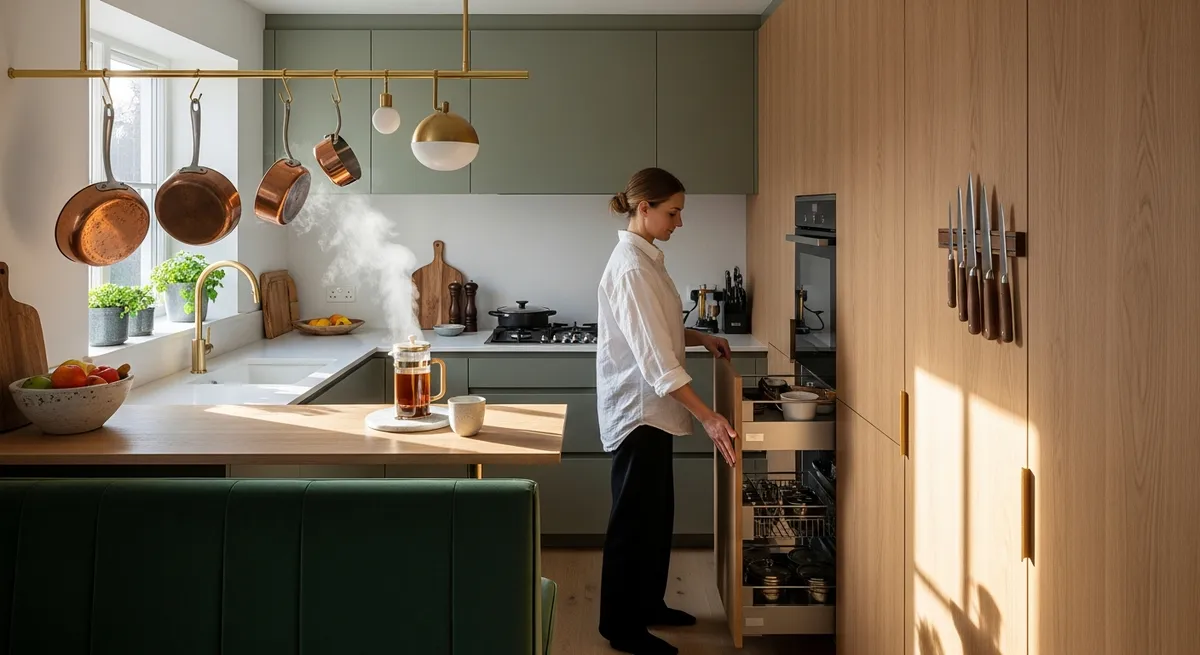
Magnetic knife strips - which can be mounted on any vertical surface including tile or the side of a metal refrigerator - remove the need for a countertop knife block that usually hogs at least thirty square inches of workspace while also keeping your most-used blades within reach for faster meal prep. It saves time daily.
Using Vertical Real Estate Effectively
Look at your walls. The National Kitchen and Bath Association has found that wall-mounted systems can substantially increase storage capacity in very small kitchens. This adds significant room.
Pegboards allow for a custom layout. You can move the hooks. These boards fit any wall.
Consider the backsplash. It's usually just six square feet of wasted tile that could hold measuring spoons or small spice jars. Six square feet. Use adhesive hooks here.
Have you looked at your cabinet doors lately? Most people ignore them. Over-the-door racks can hold pot lids or cleaning supplies that usually clutter the floor of the sink cabinet.
Smart Hardware for Tight Corners
Identify the "blind corner" in your lower cabinets where pots go to be forgotten for a decade. A pull-out organizer - often called a Lazy Susan or a kidney-shaped shelf - can bring those hidden items into the light with a single rotation that requires almost zero physical effort. Access is everything here.
Is that deep drawer a mess? Can you find the whisk? The American Institute of Architects notes that ergonomic kitchen design can meaningfully cut meal prep time simply by placing high-frequency tools in the "strike zone" between the waist and shoulders.
Drawer dividers prevent the "junk drawer" phenomenon from taking over your primary utensil storage area. Twelve individual compartments. Is that too many bins?
Tension rods aren't just for curtains. You can install them vertically in a cabinet to create slots for cookie sheets and cutting boards. This keeps your flat items upright and easy to grab without digging through a heavy stack of metal pans.
Standing in a tiny kitchen during a dinner party feels like being stuck in a narrow hallway where every movement requires a polite apology to your guests. You try to turn. The oven door hits a chair. It's too tight.
A rolling cart - specifically a slim model measuring less than five inches wide - can slide into the gap between your refrigerator and the wall to store up to fifteen bottles of oil or vinegar that would otherwise take up an entire shelf in your main pantry. It's very handy.
Hidden Spaces and Ceiling Solutions
Look up at your ceiling. The International Code Council guidelines often allow for ceiling-mounted pot racks as long as they maintain a clearance of eighty inches from the floor to avoid becoming a head-impact hazard for taller residents. This clears the stove.
Pot racks free up cabinets. They hold heavy cast iron. You should use anchors.
Toe-kick drawers are the ultimate secret weapon. These shallow bins sit in the four-inch space between your floor and the bottom of your cabinets. Four inches deep. They hold baking sheets perfectly.
How do you handle your spices? Many people use magnetic tins that stick to the side of the fridge. This frees up an entire cabinet shelf for larger items like flour or sugar containers.
Optimizing the Sink Area
Clear the area around your faucet by installing a dish drying rack that sits directly over the sink basin. This move recovers approximately four square feet of counter space that's usually wet and unusable during the cleaning process. It dries dishes faster.
Do you have a window? Can you put a shelf? While the Harvard Joint Center for Housing Studies (JCHS) notes a shift toward smaller-scale discretionary improvements, the Bureau of Labor Statistics does not specifically track 'kitchen organization' spending; however, total average annual household spending on 'household furnishings and equipment' is approximately $2,495 according to the 2022 Consumer Expenditure Survey.
A simple wooden board placed over one-half of a double sink creates an instant prep station. This is a classic move. Does it work for you?
Use tiered risers under the sink to manage the plumbing-to-pantry pipe mess. These plastic units cost about $25. They keep your trash bags and soap bottles from becoming a tangled heap of plastic and cardboard.
A clean kitchen counter looks like a blank canvas where you can actually enjoy the process of cooking instead of fighting for every inch of space. You chop the onions. You feel calm now. Three minutes saved.
Pros and Cons of Small Space Storage
Deciding between permanent and temporary organizers involves balancing durability with installation flexibility. Before committing to hardware, consider your long-term residency plans and weight requirements.
Quick Wins
The Short Version
Your kitchen area is likely fixed, but your storage capacity is surprisingly flexible if you stop thinking horizontally. Invest in vertical systems and tiered organizers to reclaim the cabinet volume that's currently wasted air. Start with one cabinet today to see how much workspace you can actually win back.