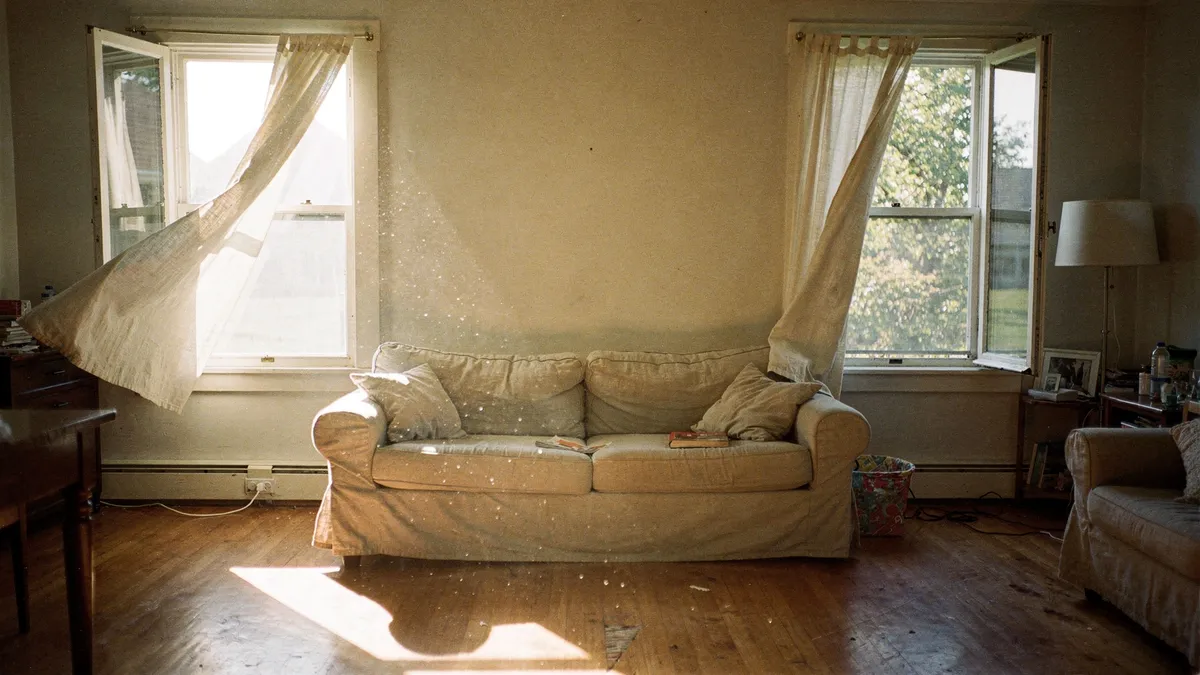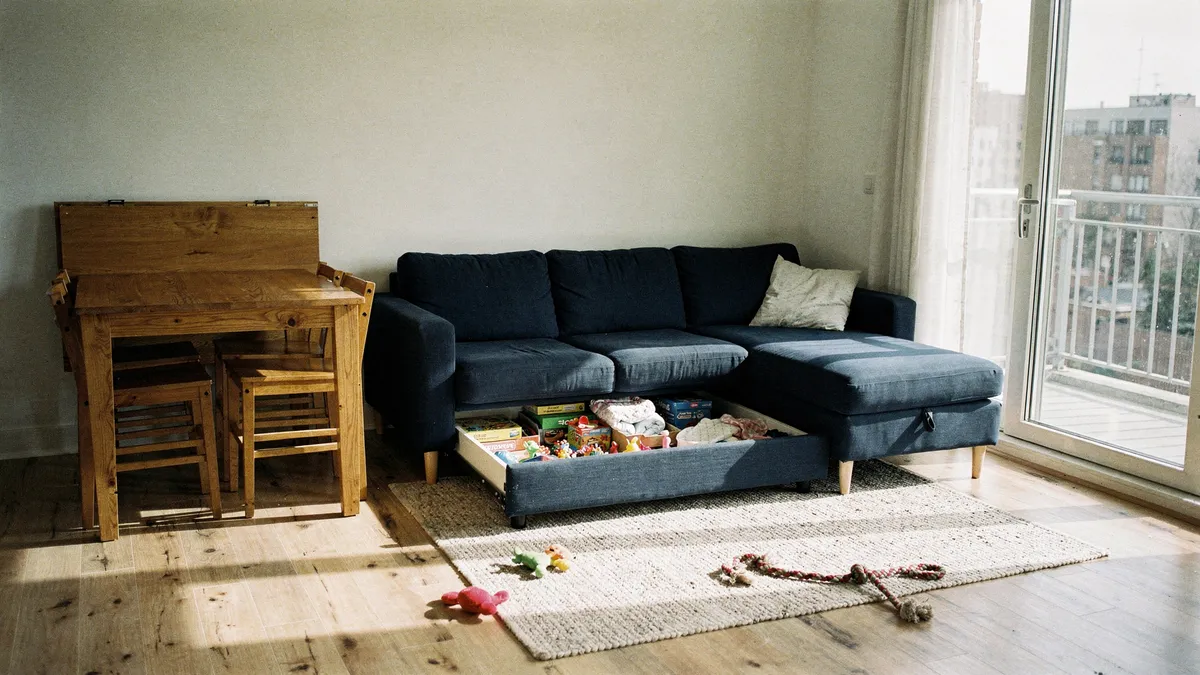
Does your nightstand look like a graveyard for half-empty water bottles and unread books? Most people living in urban apartments ignore the hidden costs of their clutter. While the National Sleep Foundation, a non-profit organization based in Washington D.C., emphasizes that a tidy, uncluttered bedroom is a key component of sleep hygiene. You're likely feeling the weight of your possessions every time you walk into your sanctuary. It's a heavy price to pay for things you don't use. Your brain is a scanning machine that never really turns off until you're deep in REM sleep. When you surround yourself with laundry piles and stacks of paperwork, you're forcing your mind to process "to-do" lists instead of shutting down. It’s exhausting. Most of us are living in spaces that are designed for storage rather than recovery, and your health is paying the interest on that debt.
Minimalist Bedroom Designs for Better Sleep
Why do you keep a television in the room where you're supposed to be unconscious? Is the late-night news worth the 30-minute delay in your sleep onset time? The Mayo Clinic, a world-renowned medical center headquartered in Rochester, Minnesota, recommends keeping electronics out of the bedroom to eliminate blue light and psychological distractions. Removing these devices helps you avoid associating the bed with entertainment. You need a boundary. If your bed is where you watch movies, answer emails, and scroll through social media, your brain won't know it's time to sleep when the lights go out. It's confused. You have to train your nervous system to recognize the bedroom as a single-purpose zone.
How many pillows do you actually need? Can you justify the visual noise of a dozen decorative cushions when you only use two for rest? Harvard Health Publishing offers guidelines on ergonomic pillow support, and decluttering advocates argue that fewer objects on the bed means fewer micro-decisions standing between you and rest. It's about mental bandwidth. You're wasting energy moving pillows every night and every morning. Every extra item is a micro-decision your brain has to make. Simplify the landscape and you'll simplify the transition into rest.
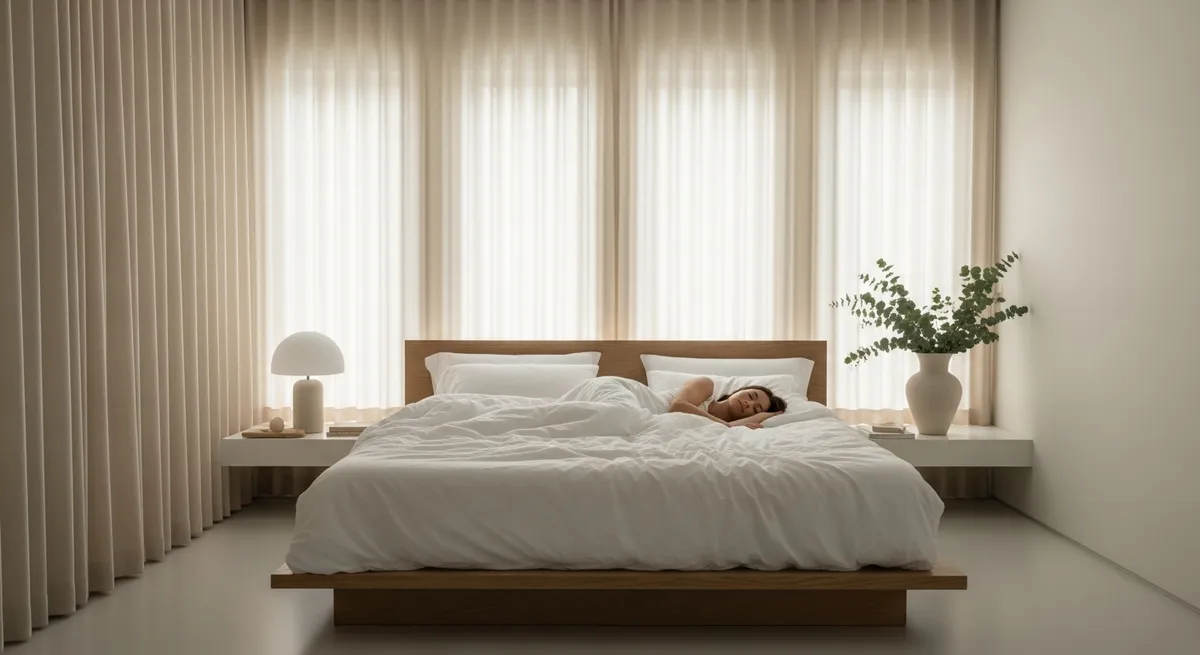
Keeping your floor space simple starts with a low-profile bed frame. A low-profile frame significantly reduces the visual footprint of your small bedroom. This shift allows the eye to sweep across the floor without hitting obstacles, a psychological trick that signals safety to your nervous system. When you see a clear path, your brain perceives a lack of threats. It's an ancient survival mechanism. A room filled with heavy, bulky furniture creates "visual drag" that keeps you alert. You want your eyes to find rest long before you close them.
| Design Element | Minimalist Choice | Sleep Benefit |
| Lighting | Amber bulbs / 2700K | Boosts melatonin levels naturally |
| Flooring | Low-pile natural rugs | Reduces acoustic noise and dust |
| Bedding | 100% Cotton or Linen | Maintains optimal core temp |
Why Visual Hygiene Matters
Imagine a space where the only glow comes from a single amber lamp that mimics the sunset rather than the harsh blue light of a streetlamp or a glowing screen. Most homeowners ignore the impact of ambient lumens on melatonin production. Many adults wake early because of light intrusions they don't even notice. Your body’s internal clock is sensitive. Even a small amount of light can signal your brain to stop producing the hormones you need for deep rest. You're effectively fighting your own biology every night. It’s a battle you’re going to lose if you don’t control your environment. Visual hygiene isn’t just about looking nice; it’s about biological compliance.
Your bedroom windows need thick, simple blackout coverage. Blackout curtains - which the National Sleep Foundation recommends for anyone living in urban environments - block 99% of light pollution. This addition prevents your internal rhythm from resetting when the neighbor porch lights flicker. Think of it as a hard barrier between you and the chaotic outside world. You wouldn't leave your front door open at night, so why leave your windows open to light intrusion? Modern LED streetlights are particularly aggressive. They emit a spike of blue light that is devastating to your sleep architecture. Protecting your windows is a fundamental requirement for recovery.
Three Rules for Lighting
Smart bulbs can be programmed to dim automatically as your bedtime approaches. This gradual shift in light intensity prepares your brain for the transition into deep sleep. Many people find that a 30-minute dimming cycle works best. You are effectively mimicking the natural cycle of the sun. In our modern world, we go from bright office lights to bright home lights and then expect to fall asleep instantly when we hit the switch. That's not how it works. Your brain needs a glide path. By reducing the intensity and shifting the color temperature toward the red end of the spectrum, you signal to your pineal gland that the day is over. It's a simple hack that changes everything.
Avoid overhead lighting whenever possible after 8:00 PM. High-angle light is perceived by the eye as "midday sun," which suppresses melatonin. Use low-placed lamps instead. Keeping light sources below eye level mimics the long shadows of evening. It feels more natural because it is more natural. You'll notice a shift in your mood almost immediately. When you stop blasting your retinas with bright white light, you stop feeling wired. It’s a cheap, easy fix for a common problem.
Clear Your Nightstand
The selection of your bedding - a choice that often feels trivial until you're sweating through your sheets at two in the morning - dictates your thermal regulation more than the HVAC system ever could, and the American Academy of Sleep Medicine emphasizes that a cool, stable sleeping temperature matters; breathable cotton helps you hold one. It works. You’re not just buying sheets; you’re buying a climate control system. If your bedding doesn't breathe, you'll reach a point in the night where your body temperature spikes. This triggers a wake response. You might not fully wake up, but you'll shift into a lighter stage of sleep, leaving you feeling groggy the next day. High-quality natural fibers are the only solution for consistent thermal stability.
Fabric Choices and Biology
Are you choosing synthetic fabrics that hold heat against your skin? Natural fibers like linen and wool help your body shed excess heat overnight, and most experts put the ideal bedroom temperature near 65 degrees for deep sleep. High-quality bedding - while initially more expensive than polyester alternatives - is a functional investment in your metabolic health that typically lasts for five to seven years of regular use. You’re spending a third of your life in these fabrics. Why would you settle for plastic-based materials that stifle your pores? Natural fibers move moisture away from your body, preventing the "clammy" feeling that leads to tossing and turning. It’s a practical upgrade with a massive ROI on your health.
Texture should be consistent across the room to avoid sensory overstimulation. The sensory experience of a high-pile rug under your feet provides a physical transition from the active world to your rest zone. Tactile simplicity is effective. According to the Asthma and Allergy Foundation of America, choosing low-VOC (volatile organic compound) materials for your rugs and furniture also ensures you aren't breathing in chemical outgassing while you sleep. Your lungs need a break as much as your brain does. Minimalist design often favors these cleaner, natural materials because they fit the aesthetic, but the health benefits are the real prize. You want a room that supports your life, not one that leaches chemicals into your air.
Remove the Digital Noise
Digital devices emit a blue frequency that mimics daylight and suppresses melatonin well after you put them down, a biological reality that most social media users choose to ignore despite the growing body of evidence regarding screen-induced insomnia. Is your phone still nearby? You’re likely checking it one last time before you close your eyes. That one "quick" check is telling your brain that the sun just came up. No wonder you’re staring at the ceiling for an hour afterward. You’re fighting a losing battle against a screen designed to keep you engaged. If you want a bedroom that genuinely helps you sleep, you have to establish a digital curfew. No exceptions.
Are you ready to strip away the extras? You should be. The Cleveland Clinic suggests that muted or cool colors like blue or gray are best for sleep because they help the heart rate settle. You want colors that recede. Bright, energetic colors like red or yellow are great for a kitchen, but they’re a disaster for a bedroom. They keep your mind active. By choosing a neutral, cool palette, you’re creating a visual "quiet" that allows your heart rate to drop more quickly. It’s about setting the stage for rest before you even touch the bed.
Why do we tolerate blinking LED lights from chargers and routers? Is a fully charged battery more important than your internal clock? Removing all light-emitting diodes from your sleeping area - a process that takes less than ten minutes - can noticeably deepen your sleep. You can use small pieces of black electrical tape to cover those tiny, annoying lights. They might seem insignificant, but in a dark room, your pupils dilate, and those little lights become beacons. They catch your eye and prevent your brain from fully disengaging. It’s a tiny fix that offers a significant boost to your sleep quality.
Your floor space needs to stay clear of everything but the essentials. Minimalist bedrooms rely on a concept called visual hygiene. Six pieces. This limit prevents your eye from fixating on dust or laundry piles as you drift off. When you limit your furniture to six major pieces - think bed, two nightstands, a dresser, and perhaps one chair - you’re creating a sense of order. You’re telling your brain that the world is under control. Chaos in your environment leads to chaos in your mind. By maintaining a strict limit on what you allow into your room, you’re protecting your mental peace. You deserve a space that doesn’t demand anything from you.
Sleep Checklist
Rest Easier
Simplifying your sleeping environment is a data-backed strategy for improving your recovery and metabolic health. By removing visual clutter and prioritizing natural textures, you align your surroundings with your biological needs. Audit your space today and remove three items that don't serve your rest. You’ll find that the less you have in your room, the more you have in terms of energy and clarity. Sleep isn't a luxury; it's a physiological requirement that is heavily influenced by your environment. You have the power to change that environment tonight. Start small, but start now. Your future self will thank you for the silence.