Last Tuesday, I watched a guy named Greg stand in a suburban driveway at dusk, squinting at a 2019 sedan while the seller talked about "highway miles" and "lady driven" history. Greg was about to spend $18,000 - money he'd saved for three years - on a car that had a faint, sweet smell coming from under the hood. He didn't know that smell meant a failing head gasket. Buying a used car is essentially a high-stakes game of poker where the house usually has better cards. In 2026, with prices still stubbornly high and inventory tight, you can't afford to play by their rules. You need to know how to spot the lies before the ink dries on the title.
It's the only way to stay safe. Most people walk onto a lot or meet a private seller with nothing but hope and a prayer. But hope doesn't fix a blown transmission. You're entering a market where the average used vehicle price is still hovering near historic highs, making the financial risk of a bad purchase higher than ever before. If you don't know how to read a car history report or find the VIN on the door jamb, you're basically handing your wallet to a stranger. Don't do that. You've worked too hard for your money to lose it on a lemon that looks pretty in the driveway but dies on the highway.
The Exterior Lie and the $350 Alignment Problem
Start by checking the tires. Most buyers just look to see if they're black and round, but you need to be more surgical. Run your hand across the tread. Does it feel smooth, or do you feel little ridges like a saw blade? Uneven tread wear often means the car has a serious alignment issue or worn-out suspension parts. These aren't just minor annoyances. Fixing a front-end alignment and replacing a couple of control arms will cost you between one hundred fifty to $350 at a decent shop. (And that doesn't even include the cost of two new tires you'll inevitably need.)
You must always look under the car for fresh fluid leaks. It sounds basic, but you'd be surprised how many people skip this because they don't want to get their knees dirty. Carry a flashlight. Oil or coolant dripping onto the ground suggests that the engine gaskets or the radiator are failing. These problems lead to a catastrophic breakdown if you ignore the warning signs for too long. If the pavement is dry, look at the undercarriage for rust. A little surface rust is fine, but if the metal looks like it's flaking off like a biscuit, walk away immediately. It's not worth the headache of a frame that's rotting from the inside out.
The NHTSA, a federal agency tasked with keeping us safe on the road, maintains a massive database of safety recalls that many owners simply ignore. Before you even touch the door handle, you should have already checked that database. If the seller hasn't bothered to fix a known airbag defect or a fuel pump recall, what else have they neglected? It's a window into how they treated the machine when nobody was looking. Neglect is a habit. It usually starts with small things and ends with a car that leaves you stranded in the middle of a rainstorm on the interstate.
The Engine Bay Tells a Story (If You Listen)
Pop the hood while the engine is cold. The engine bay tells a story, and it's usually a long one. Look for crusty battery terminals, frayed wires, or a sweet smell that indicates a coolant leak. All of these are signals that the previous owner didn't keep up with the basic maintenance needed to keep the machine running. Check the oil dipstick. If the oil looks like chocolate milk, you're looking at a blown head gasket. (That's a multi-thousand-dollar repair that effectively totals most older cars.)
Don't ignore it. That little bit of grime might look like nothing, but it's often a sign of a slow leak that's been "cleaned up" right before you arrived. If the engine bay is sparkling clean - like, suspiciously clean - be even more careful. Some sellers use heavy degreasers to hide active leaks before a showing. They want you to see a pristine machine. But a used engine should have a little dust on it. If it looks like it just came off the showroom floor, they're probably hiding something. (Usually something expensive.)
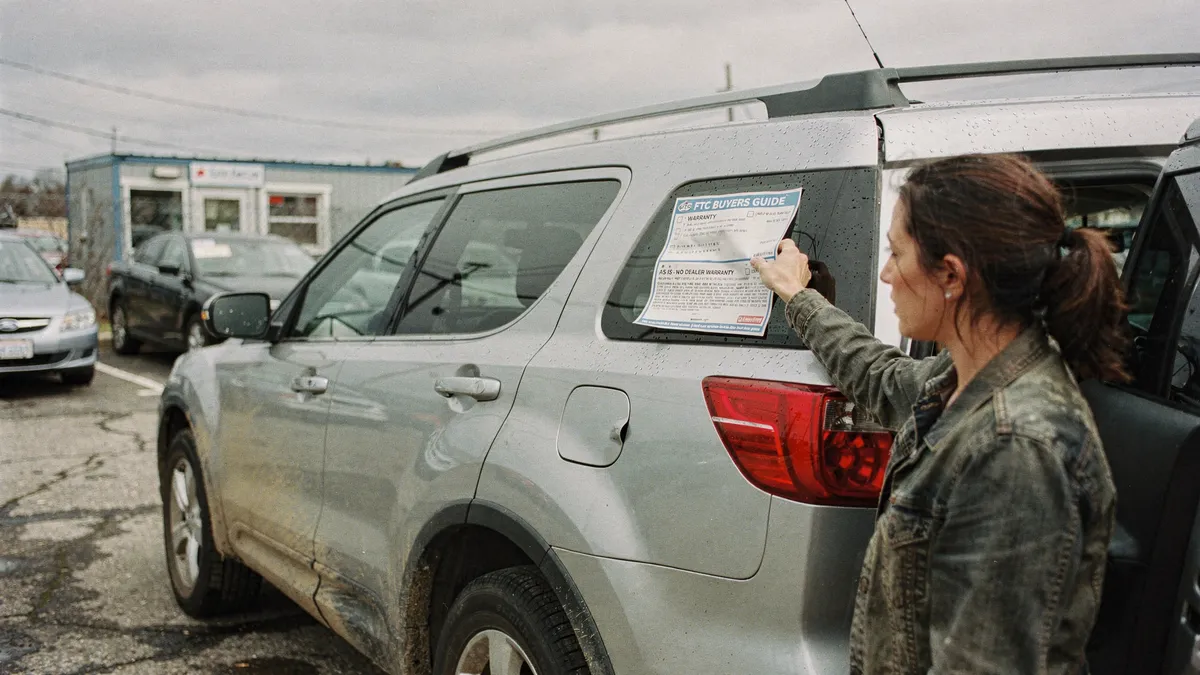
I once saw a truck that looked perfect under the hood, but the coolant was bright green when the manufacturer specified orange. The wrong fluid can eat through seals and cause a cascade of cooling system failures. The FTC, which operates out of Washington D.C., reminds buyers that once you sign that "As-Is" paper, the seller's problems become your problems. There is no return policy for a bad decision. You're the one who has to pay the mechanic. You're the one who has to find a ride to work while the car sits in the shop for two weeks waiting for parts that are on backorder.
| Inspection Point | Warning Sign | Estimated Repair Cost |
| Tire Tread | Uneven "sawtooth" wear patterns | $150 - $350 (Alignment) |
| Engine Oil | Milky white or chocolate appearance | $1,500 - $3,000+ (Head Gasket) |
| Cooling System | Sweet smell or white residue | $400 - $900 (Radiator/Hoses) |
The Odometer Lie and Interior Wear
Trust the numbers on the dash, but verify them with your eyes. Odometer fraud is a growing problem in 2026 as digital tools make it easier for unscrupulous sellers to roll back the miles. If the odometer shows low mileage but the driver seat is torn and the brake pedal is worn down to the metal, the math doesn't add up. High-mileage cars have specific wear patterns. The steering wheel gets shiny. The door handles feel loose. If you see a car with 30,000 miles that has a hole in the floor mat from the driver's heel, it's probably actually done 130,000 miles. (Maybe even more.)
Can you spot the signs of flood damage under the floor mats? It's harder than you think. Pull the carpet back in the corners of the footwell. If you see silt, sand, or a line of dried mud, the car has been swimming. Flood cars are a nightmare because the electronics will fail one by one over the next year. You'll be driving along and the wipers will suddenly turn on, or the engine will just cut out. It's nearly impossible to fix because the water gets into the wiring harness and corrodes everything from the inside out. Don't touch a flood car. Ever.
The Bureau of Labor Statistics, an agency that tracks consumer trends, notes that vehicle maintenance costs have outpaced inflation by significant margins over the last few years. This makes the condition of the interior and the accuracy of the mileage even more important for your wallet. If you buy a car thinking it has 40,000 miles, you're not planning for the 100,000-mile service that costs $1,200. But if the car actually has those miles, that bill is coming a lot sooner than you think. It's a budget-killer that catches most people off guard.
Decoding the VIN and the Paperwork Trail
You need to find the VIN, or Vehicle Identification Number. It's a 17-character string that acts like the car's social security number. You can find it on the driver-side dashboard or inside the door jamb. Use it to verify the car history report. If the VIN on the dash doesn't match the one on the title, you're in trouble. This discrepancy is a major warning sign that the car might be stolen or rebuilt from parts of multiple vehicles. This is called "VIN switching," and it's a fast way to lose your investment to a police impound lot. (And yes, it happens more than people want to admit.)
Check the title carefully. Is it "clean," or does it say "salvage" or "rebuilt"? A salvage title means the insurance company once declared the car a total loss. While some rebuilt cars are fine, they are much harder to insure and almost impossible to resell later. Most lenders won't even give you a loan for one. If the seller didn't mention it until you saw the paperwork, they're not being honest. They're hoping you've already fallen in love with the car and won't care. But your insurance agent will care. Your bank will care. And you'll care when you try to trade it in three years from now.
Wait, there's more. Look for a "lienholder" listed on the title. If the seller still owes money on the car, you need to make sure that debt is paid off before you hand over your cash. If you don't, the bank could technically repossess the car even after you've paid the seller. I've seen it happen. A guy buys a car for cash, the seller disappears with the money, and two weeks later a tow truck shows up because the original loan was never settled. It's a nightmare scenario that requires a lawyer to untangle. (And lawyers cost more than most car repairs.)
The Math Problem: APR and Hidden Costs
You need to understand the annual percentage rate, or APR. It's the cost you pay each year to borrow the money, expressed as a percentage. Think of it as the "rent" you pay on the bank's cash. For first-time buyers with thin credit files, these rates can swing wildly between 7% and 19% depending on the lender. On a $20,000 car, that's the difference between paying a few thousand in interest or nearly doubling the price of the vehicle over the life of the loan. (Let that sink in for a second.)
Don't just look at the monthly payment. Dealers love to focus on the "per month" number because they can hide a high APR by stretching the loan out to 72 or 84 months. You might feel like you're getting a deal because the payment is only $350, but you'll be paying for that car long after it's been hauled to the scrapyard. Always calculate the total cost of the loan - the principal plus every cent of interest. If the total is $32,000 for a car that's only worth $18,000, you're starting off "underwater." That means you owe more than the car is worth the moment you drive off the lot.
According to data from the Federal Reserve, the average interest rate on a 48-month used car loan has climbed significantly since 2021. This makes shopping for your own financing before you visit a dealership a smart move. Check with a local credit union or your bank. They often have the best used car rates 2026 has to offer, and having a pre-approval letter in your pocket gives you massive leverage. It turns you from a "payment buyer" into a "cash buyer" in the eyes of the salesperson. That's where the real power lies. You're not at their mercy anymore.
By the Numbers
450kVehicles sold with rolled-back odometers yearly (NHTSA)12%Avg used car APR for mid-range credit (2026 Est.)$1B+Annual consumer loss to odometer fraud (NHTSA)
The Final Move: Pre-Purchase Inspection
Spend the $150 on a pre-purchase inspection (PPI). This is the single best investment you can make when buying a used car. Take the vehicle to a mechanic you trust - not the one the dealer suggests. A professional will put the car on a lift and see things you'll never notice from the ground. They'll check the brake lines for corrosion, look for signs of hidden frame damage, and plug in a scanner to see if the engine's "check engine" light was recently reset to hide a problem. (Sellers do this all the time. It takes about 50 miles of driving for the light to come back on.)
If the seller refuses to let you take the car to a mechanic? Leave. There is no legitimate reason to deny an inspection. It means they're hiding a flaw they know will be found. The market is too big to waste time with people who aren't transparent. There are thousands of cars out there. You only need one good one. Don't let the pressure of a "limited time offer" or another "interested buyer" push you into a mistake. Those are oldest tricks in the book. (They usually have a friend call them while you're standing there to make you nervous.)
Buyers who get an independent inspection routinely come out well over a thousand dollars ahead in the first year of ownership. They either avoid a bad car entirely or use the mechanic's report to negotiate a lower price. If the mechanic says the car needs $500 in brakes, you tell the seller to knock $500 off the price. It's fair. It's logical. And in 2026, it's the only way to make sure you're getting what you pay for. Remember Greg from the driveway? He ended up walking away from that sedan. Three weeks later, he found a better car with a documented service history. He's happy. His wallet is happy. And he doesn't have to worry about that sweet smell under the hood anymore.
Key Points
Frequently Asked Questions
Is a vehicle history report always accurate?
Mostly, no. While reports from leading providers are helpful, they only show what has been reported to insurance companies or police. If an owner crashed into a fence and fixed the car themselves in their garage, it won't show up. You still need a physical inspection to be certain.
How can I tell if an odometer has been rolled back?
Look for physical wear. If a car claims to have 20,000 miles but the steering wheel is peeling and the driver's seat is collapsed, the mileage is likely fake. Always cross-reference the mileage on the car history report with the current reading on the dash.
What is a good APR for a used car in 2026?
It depends on your credit. For those with excellent scores, rates around 6-8% are common, but for "thin" credit files, you might see 15% or higher. Always compare the total loan cost, not just the monthly payment, to avoid overpaying.
Should I buy a car with a salvage title?
Generally, no. A salvage title means the car was once a total loss, and while it might be repaired, it carries massive risks for insurance and resale value. Most buyers should stick to clean titles to avoid long-term financial headaches.
Does a clean engine bay mean the car was well-maintained?
Not necessarily. A suspiciously clean engine bay can be a sign that the seller used a degreaser to hide active oil or coolant leaks right before you arrived. Look for a light coating of dust, which is normal for a used vehicle.