Have you considered how a $20,000 upgrade turns into a $40,000 repair within five years? High-end materials often hide the remodeling mistakes homeowners regret most, because the budget goes to aesthetics instead of structural integrity. You need a data-driven plan to avoid these pitfalls. In the current 2026 market, many people spend more on their vanity than they do on the plumbing behind the wall. It is a gamble you will likely lose. I have seen homeowners stare at beautiful Italian marble while the floor joists beneath them slowly rot from a slow leak they didn't want to pay to find. You can avoid this by looking at the bones of the room first.
The contractor stands in your doorway, clipboard in hand, and gives you the quote for the demo. It is always higher than you think it should be. Most people forget that a bathroom is a machine for managing water, and when that machine breaks, it destroys everything around it. If you are planning a refresh this year, you are likely looking at online design platforms instead of building codes. But the codes are what keep your house from falling down. You are making a huge mistake if you ignore the invisible systems in favor of shiny faucets. Your budget should be a reflection of safety, not just style.
Avoiding Bathroom Remodeling Mistakes Homeowners Regret by Fixing Air Flow
Poor ventilation is the silent killer of expensive cabinetry and high-end paint jobs. The average exhaust fan, which should ideally move 50 cubic feet of air per minute for a small bathroom - often fails because homeowners select models based on noise levels rather than the static pressure capacity required to push moist air through ten feet of flexible ducting. Your beautiful new space depends on air movement. If the steam stays in the room for twenty minutes after your shower, you are basically living in a petri dish. You shouldn't settle for the cheapest fan at the big-box store.
The Home Ventilating Institute, a non-profit organization that certifies residential ventilation products, suggests that a fan should provide eight air changes per hour. Most fans you see in older homes provide about half of that. You might save $50 on a lower-end model, but you will spend $500 on a painter to fix the peeling ceiling in two years. I've walked into bathrooms where the "new" cabinets were already warping because the moisture had nowhere to go. It is a common error that ruins the functionality of your home. You need to verify that your ducting is short, straight, and vented to the outside, not into your attic.
Why Moving Existing Plumbing Lines Strains Your Renovation Budget
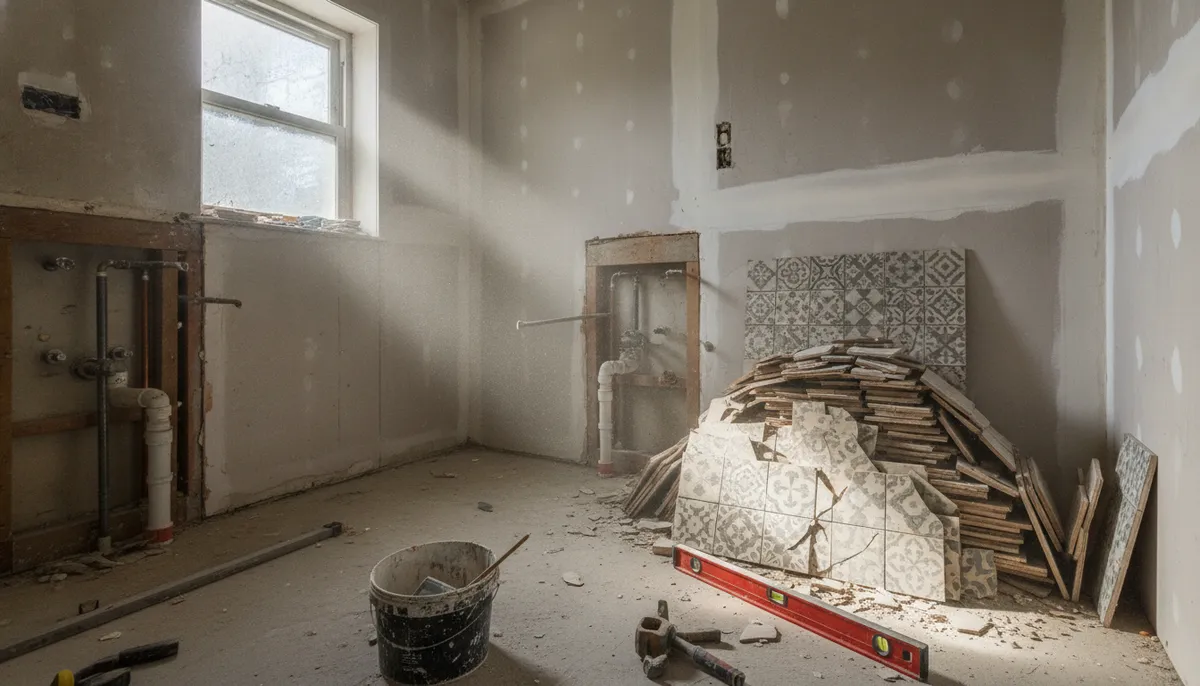
Moving a toilet just three feet can cost you $3,000. This expense stems from the need to cut into floor joists and reroute heavy cast iron or PVC drain lines, a process that often triggers modern building code requirements for the entire home. Most contractors suggest keeping your footprint the same to save money. When you start moving drains, you are opening a box of problems that can't be easily closed. You are essentially paying for the privilege of seeing your subfloor for two weeks while the plumber waits for an inspector. It's expensive. It's slow. It's often unnecessary.
The International Code Council, a developer of model building codes based in Washington, D.C., updates requirements regularly to ensure safety. By mid-2026, many jurisdictions have adopted even stricter rules regarding the structural integrity of notched joists. If you cut into a support beam to run a new 3-inch drain line, you might have to sister the entire floor. You are looking at a bill that could fund your entire tile budget just for a slight shift in the toilet's position. I suggest you keep the "wet wall" exactly where it is. You can spend that $3,000 on a better shower head or a custom vanity instead of on labor that no one will ever see.
Is Natural Stone the Right Choice for Your High-Traffic Space?
The porous surface of Carrara marble - cold to the touch and gleaming under new LED vanity lights - begins to absorb soaps and oils the moment you step into the shower for the first time. Maintenance costs add up fast. You should seal it yearly. Many homeowners don't realize that natural stone is essentially a sponge that hasn't been used yet. If you spill your morning coffee on a marble countertop, you have about thirty seconds to clean it before the stain becomes part of the decor. You should think about your lifestyle before you buy.
The Tile Council of North America, a trade association that represents manufacturers of ceramic tile, publishes a handbook that outlines the specific absorption rates of various materials. Porcelain tile, which is fired at much higher temperatures than ceramic, has an absorption rate of less than 0.5 percent. Marble is much higher. You can find porcelain that looks exactly like marble but doesn't require a specialized cleaner that costs $20 a bottle. I have seen beautiful stone showers turn yellow and dull because the owner used the wrong scrub. You are paying for a luxury that requires a part-time job to maintain. Is that what you want for your Saturday mornings?
Professional Waterproofing and Avoiding Bathroom Remodeling Mistakes Homeowners Regret
Do you trust a $15 tub of sealant to protect a $400,000 home? It's not enough. Long-term moisture protection requires a bonded membrane system that creates a continuous, watertight envelope around your shower pan and walls to prevent subfloor rot that remains hidden for years. You should know that water is persistent. It finds the smallest crack in your grout and works its way down to the plywood. Once it gets there, the damage is already done. You won't know it until your foot feels soft when you step out of the tub. It is a nightmare you can avoid.
Industry experts and insurance data indicate that water intrusion from improperly installed shower pans is a primary cause of structural damage, though the NKBA does not publish a specific 24-month 'secondary repair' ranking. Why risk your investment on cheap labor? The Insurance Information Institute, a non-profit industry group, notes that water damage is the second most common home insurance claim. You don't want to be the person calling your agent because your second-floor bathroom is now leaking into your kitchen. You need a pro who understands the physics of a slope and the chemistry of a bond. Anything less is just a temporary fix.
I once saw a project where the homeowner skipped the membrane because the tile guy said it "wasn't necessary" for a small shower. Six months later, the baseboard in the hallway was fuzzy with mold. You are looking at a total teardown when that happens. You can't just patch a leak that is under the tile. You have to rip it all out and start over. It is a waste of money and time. You should insist on a system that is tested and proven. Your house is likely your largest asset. You should treat it like one during your remodel.
Universal Design Prevents Future Reconstruction Costs
You should think about how you will use this room in ten years. The cost of adding a zero-entry shower - a feature that involves dropping the floor joists to create a seamless transition - typically adds $3,000 to $5,000 to your budget but prevents the $15,000 bill you might face for an emergency accessibility retrofit down the road. This is smart planning. You are not just building for today; you are building for the version of you that might have a broken leg or a hip replacement. Accessibility is not just for the elderly. It is for everyone who uses the room.
A recent analysis from AARP indicates that roughly 80 percent of adults over age 50 prefer to stay in their homes as they age, yet fewer than half of their bathrooms have the door widths or floor space necessary to accommodate mobility aids without a total teardown. Accessibility adds value today. You should check if your door is at least 32 inches wide. If it's 24 inches, you can't even get a walker through it. I suggest you widen the door now while the drywall is already off. It's a few hundred dollars today vs several thousand tomorrow. You are creating a home that is resilient. That is the best kind of investment you can make.
The Impact of Subfloor Preparation on Your Tile Lifespan
Have you looked at your subfloor lately? Most people don't until it's too late. If your floor has even a tiny bit of bounce, your new tile will crack within six months. You need a floor that is stiff enough to handle the weight of heavy stone or large-format porcelain. The standard 5/8-inch plywood is often not enough for the modern bathroom. You should check the deflection rating of your joists before you lay a single tile. It is a detail that most people miss, and it is a mistake that leads to a lot of regret.
The Tile Council of North America recommends a subfloor system that meets specific L/360 or L/720 deflection standards depending on the material you choose. If you are using natural stone, your floor needs to be twice as stiff as it does for ceramic. You might need to add a second layer of plywood or use a specialized cement board. You are spending thousands on the tile; you should spend the $200 for the extra underlayment. I've seen $10,000 tile jobs ruined by a $50 piece of subfloor that was too thin. You are responsible for the foundation of your project. Don't skip the prep work.
Lighting Layouts That Don't Leave You in the Dark
Will one ceiling light be enough? Probably not. You need a mix of task lighting at the vanity and ambient light in the shower to avoid the shadows that make morning routines difficult and increase the risk of slips. You should avoid the "Hollywood" strip of bulbs that create a harsh glare. Instead, you should use sconces at eye level. This ensures your face is lit from the front, not the top. You will see better, and you will look better in the mirror. It is a small change that makes a big difference.
Lighting professionals suggest a minimum of 1,600 lumens at the mirror - which ensures your face is evenly lit without the harsh glare of a single overhead bulb, a common error that ruins the functionality of even the most expensive remodel. Good light saves time. You should also consider the color temperature of your bulbs. A 2700K bulb is warm and yellow, which is nice for a bedroom but bad for applying makeup. A 3500K bulb is closer to natural daylight and will help you see the actual color of your clothes and skin. You are building a workspace. You should light it like one.
Cons
Before You Sign a Contract
The Bottom Line
Successful renovations prioritize the systems behind the walls as much as the tile on top of them. You can avoid the most expensive errors by focusing on proper ventilation, waterproofing - and a layout that serves your future self. Start your project by hiring a licensed plumber to inspect your current lines before you buy a single fixture. You are the one who has to live in this space. You should make sure it is built to last longer than the current design trends. Good planning is the only way to protect your investment in 2026 and beyond. You have the tools to do this right. You just need to use them.
The final walk-through of your new bathroom should be a moment of pride, not a list of things you wish you had done differently. When you look at the grout lines, you should know there is a membrane underneath keeping your home dry. When you turn on the fan, you should hear the air moving, not just a motor humming. These are the details that matter. You are a homeowner who knows the value of a job well done. You can rest easy knowing you didn't fall for the surface-level fixes that lead to long-term regret. Your home is better for it.