Air purifiers can improve indoor living spaces that are currently choked by microscopic soot and invisible allergens. By choosing the right filtration system - you can effectively scrub your home of these dangerous particles and breathe easier today. You really can.
Data from the Environmental Protection Agency (EPA) - a federal agency that recently finalized a landmark rule in February 2024 to strengthen standards for soot pollution - confirms that the air inside your home is often two to five times dirtier than the air outside. You're breathing in microscopic debris that settles into your carpets and lungs every single day. Using a home filtration system correctly is no longer a luxury but a fundamental necessity for protecting your long-term health in 2026. The data is clear.
Why your current filtration strategy is likely failing
You need to position your unit away from walls for maximum airflow, yet most people shove these machines into tight corners where they struggle to pull in dusty air. The machine - which relies on a constant, energetic cycle of intake and exhaust - effectively becomes an expensive paperweight when you block the intake vents with a sofa or heavy velvet curtains that restrict the volume of air processed per hour. If the machine can't breathe, you can't breathe. It really is that simple.
The American Lung Association - a non-profit organization focused on lung health research based in Chicago - reports that poor air quality triggers inflammation that ruins your sleep and daily productivity levels. You're breathing in pet dander, mold spores - and volatile organic compounds that settle into your soft furniture like a layer of invisible silt. It is quite disgusting. High-quality HEPA filters are designed to trap 99.97 percent of these specific irritants, but only if they're placed in the path of the air currents moving through your room. Location is everything.
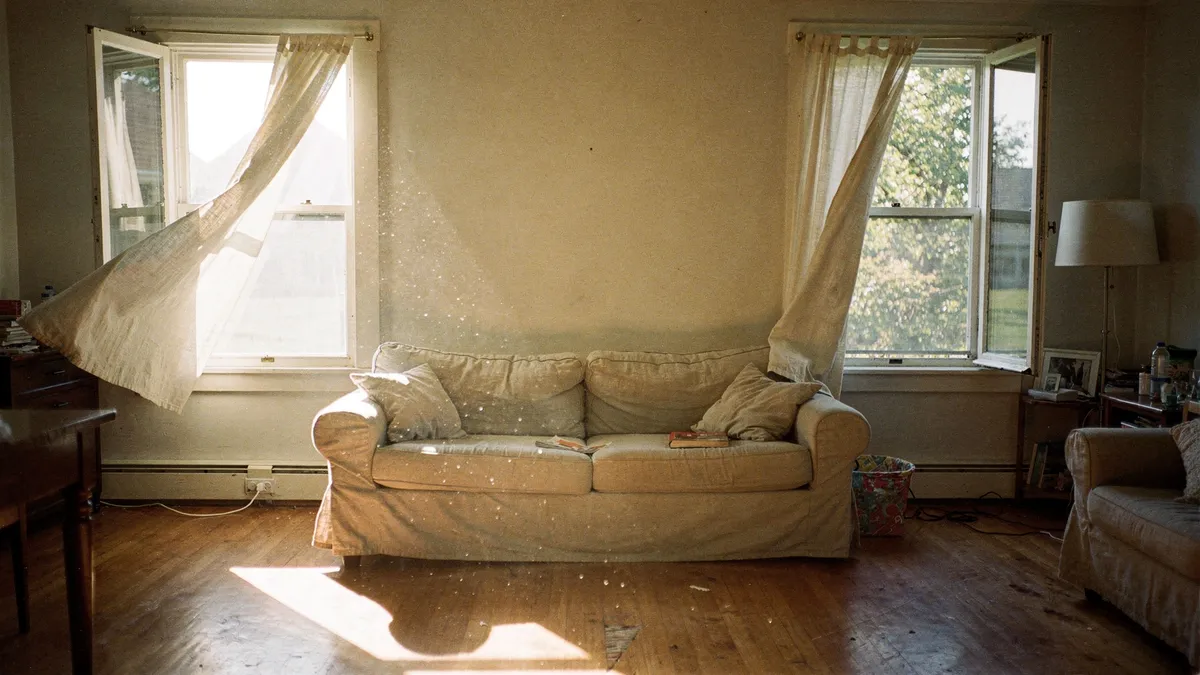
Imagine a typical Tuesday evening where you walk into a sunlit room and see millions of tiny dust motes dancing in the light that streams through your double-pane windows. These particles aren't just dust; they're actually skin cells, fabric fibers, and microscopic insect parts that you inhale every few seconds. Running the numbers is sobering: you shed about forty thousand skin cells every hour. Without a purifier, your lungs are the primary filter for that biological debris. It is a sobering thought.
The impact of soot on your nervous system
The EPA - which monitors indoor pollutants as a major public health risk from its headquarters in Washington - D.C. - suggests that properly sized air purifiers can improve indoor living spaces by cycling the entire volume of a room five times every hour. That's five full cycles every sixty minutes to ensure the air remains crisp. Is your current machine actually powerful enough to handle your vaulted ceilings, or is it just humming along with no real impact? You need to know.
Many people experience stuffy noses in the morning due to high allergen concentrations in the bedroom, which a purifier can help mitigate. Your bedroom is likely a reservoir for heavy allergens. Research from the Mayo Clinic indicates that dust mites thrive in bedding, but a well-placed air purifier captures the airborne debris before it ever reaches your pillows or enters your nasal passages. It acts like a silent sentry at your bedside, guarding your respiratory system while you sleep.
Pros✓Significantly reduces household allergens and soot.✓Minimal energy consumption for Energy Star models.
Cons✗Requires regular filter replacements every six months.✗Cheaper HEPA-style filters may not capture the smallest particles.
You must check your CADR ratings carefully before making a purchase. The Clean Air Delivery Rate - a metric developed by the Association of Home Appliance Manufacturers (AHAM) - tells you exactly how much filtered air is produced per minute for smoke, dust - and pollen. For a standard large living room, you want a rating north of 300 cubic feet per minute. If you buy a machine that doesn't match your specific room size, you're essentially trying to cool an entire house with a single ice cube.
Combatting the silent drift of seasonal allergens
Do you know the age of your current HEPA filter, or is the indicator light flashing a warning you have ignored for months? Most manufacturers recommend replacing the primary filter every six months to prevent the motor from burning out while trying to pull air through a clogged and blackened mesh. A replacement filter usually costs around sixty dollars, which is roughly what you spend on a modest dinner for two - yet it protects your health for half a year. It is a small price.
While many people assume that a single small device can clean an entire three-bedroom house - a physical impossibility given the laws of fluid dynamics - the reality is that air purifiers can improve indoor living spaces only when they're sized correctly for the specific square footage they occupy. You're basically trying to drain a swimming pool with a single drinking straw if you put a desktop unit in a great room. It simply won't work.
Volatile organic compounds represent a hidden danger in modern homes that simple HEPA filters can't catch. According to the EPA, these chemicals are found in new carpets, fresh paint, and even some types of pressed wood furniture. They can exist at concentrations ten times higher indoors than outdoors. You need an activated carbon filter - a layer of treated charcoal with millions of tiny pores - to adsorb these invisible gases and keep your home from smelling like a chemical plant. Clean air matters.
Selecting the right machine for your bedroom
Place your purifier in the room where you spend the most time, typically the bedroom. Since the EPA finalized new soot standards in early 2024 - the importance of maintaining a clean sleeping environment has grown because your body recovers from environmental stressors during deep sleep. Air purifiers can improve indoor living spaces by protecting that recovery time from the microscopic intrusion of PM2.5 particles.
You should look for units with an auto-mode feature. These sensors detect when pollution spikes - perhaps because you're cooking or a neighbor is using a wood-burning stove - and ramp up the fan speed automatically. The sensor - which often uses a laser-based particle counter to measure the density of debris in real-time - ensures that your air stays clean without you having to manually adjust the settings every time the air quality dips. It is smart tech.
The American Academy of Allergy, Asthma and Immunology states that air filtration is a key component of an integrated health plan for any modern household. However, you can't rely on a machine alone if you have mold growing in your basement or old carpets that haven't been cleaned in a decade. It's one powerful tool in a much larger toolkit. You have to do the work to keep the source of the pollution out of your house in the first place.
The financial reality of long-term maintenance
Consider the heavy silence of a winter morning when the windows are sealed tight to keep out the biting cold and the furnace is cycling stale air through dusty vents. The air feels thick and almost heavy as the concentration of pet dander and skin cells slowly begins to climb to levels that trigger your allergies. Allergen levels can climb sharply in just a few hours in a closed room.
Modern air purifiers can improve indoor living spaces by addressing this stagnation, provided you select a model that features a multi-stage filtration system. This should include a pre-filter for large hair and a medical-grade HEPA layer for everything else. Do you really want to settle for a cheap ionizer that produces harmful ozone? Medical-grade HEPA is the gold standard for a reason: it works without creating secondary pollutants. It is the best choice.
Step-by-Step Setup Guide
1 Analyze Room Volume - Measure the length, width, and ceiling height to find the total cubic footage before buying a unit.
2 Clear the Perimeter - Ensure there's at least two feet of open space around all sides of the device to prevent air bottlenecks.
3 Set a Filter Schedule - Mark your calendar for a six-month check-up to swap out the HEPA and carbon layers before they lose efficiency.
Pro Tip: Vacuum the external pre-filter every two weeks to remove pet hair and large dust bunnies - which allows the expensive internal HEPA filter to last much longer and work more effectively.
FAQ
Does a HEPA filter really remove everything?
Mostly, yes. A true HEPA filter is certified to capture 99.97% of particles as small as 0.3 microns, which includes the majority of dust, pollen, and mold spores found in a typical home. However - it doesn't trap odors or chemical vapors; for those, you specifically need an activated carbon layer to supplement the HEPA media. It's a dual-defense approach that most experts recommend for thorough air cleaning.
Where is the best place to put an air purifier?
The best place is the bedroom. Since you spend roughly eight hours a day in this single room, keeping the air clean there provides the highest return on your investment for respiratory health. Ensure the machine isn't tucked behind a dresser or nightstand; it needs at least eighteen inches of clearance on all sides to properly pull in air from the center of the room.
How much electricity does an air purifier use?
Very little. Most modern Energy Star-rated purifiers use about the same amount of electricity as a small LED lamp or a standard ceiling fan. Running a unit on a medium setting 24/7 typically costs between five and ten dollars per month on your utility bill. For the protection it provides to your health, most users find this to be a negligible expense.
Can I leave my air purifier on all night?
Yes, you should. Continuous operation is the only way to keep pollutant levels low - as new particles like skin cells and pet dander are constantly being introduced to the environment. Many units feature a "sleep mode" that dims the lights and lowers the fan speed to a whisper-quiet level so your rest is never disturbed.
Do air purifiers help with pet odors?
Yes, but with a caveat. While a HEPA filter will trap the dander and fur that often carry smells, you need an activated carbon filter to neutralize the actual odor molecules. If your primary concern is the smell of a litter box or a wet dog, look for a unit that advertises a "heavy" or "extra" carbon filter specifically designed for volatile organic compounds and odors.