How much does a decent e-bike for city riding actually cost? The honest answer: somewhere between $800 and $2,500 covers most commuters, with a clear price floor below which quality becomes unreliable.
What Budget Friendly Electric Bikes for City Commuting Actually Cost
The entry point for a rideable city e-bike is around $800 to $1,000. Below that price, battery quality and motor reliability tend to fall off sharply. The practical sweet spot for a commuter who rides daily sits between $1,200 and $2,000. Above $2,500, features start serving recreational riders more than people covering a flat four-mile commute.
| Price Tier | Typical Range | What Changes | Best For |
|---|---|---|---|
| Entry | $800 - $1,100 | Basic motor, smaller battery, heavier frame | Short flat rides, occasional use |
| Mid-range | $1,200 - $2,000 | Better battery range, integrated lights, hydraulic brakes | Daily commutes under 15 miles |
| Upper mid | $2,000 - $2,500 | Longer range, torque sensors, lighter frame | Hilly terrain, longer daily rides |
| Premium | $2,500 - $4,000+ | Performance motors, cargo capacity, smart displays | Specialty use, cargo hauling |
According to the Alternative Fuels Data Center, about 1 million e-bikes were sold in the United States in 2022, a 13.6% increase from 880,000 in 2021. That volume has pushed manufacturer competition into the mid-range tier, which is good for buyers. The $1,200 to $2,000 bracket today gets hardware that would have cost $2,800 five years ago.
What Pushes the Price Up or Down
Three components drive most of the cost difference: the battery, the motor, and the drivetrain. Everything else is secondary.
Battery capacity is measured in watt-hours (Wh). A 400Wh battery will cover roughly 25 to 40 miles per charge on assist; a 500Wh battery stretches that to 40 to 60 miles depending on terrain and rider weight. According to Wikipedia's e-bike entry, a typical e-bike battery provides a range of about 40 to 48 kilometres (25 to 30 miles) at a speed of around 20 km/h (12 mph). Batteries with higher quality cells - usually sourced from established cell manufacturers - cost more upfront but degrade more slowly over hundreds of charge cycles.
Motor placement also affects price. Hub motors are cheaper to manufacture and common on budget bikes. Mid-drive motors sit at the crank and provide better climbing torque and more natural pedal feel - they add roughly $300 to $500 to the base price compared to equivalent hub-motor bikes. As Wikipedia notes, pedelec-style e-bikes use motors rated up to 250W that cut out at about 25 km/h (15.5 mph), which is the EU and many U.S. Class 1 standard. Bikes with higher-speed assist cost more and carry different legal status depending on the city.
Frame material matters, too. Aluminum is standard in the $1,000 to $2,500 range. Steel frames are heavier but more repairable. Carbon fiber appears above $3,000 and is largely irrelevant to a budget commuter purchase.
Where the Money Actually Goes on a $1,500 Bike
A useful worked example: on a bike priced at $1,500, the rough component cost breakdown looks like this. The battery accounts for about $300 to $450 of wholesale cost. The motor and controller together run about $150 to $250. Frame, fork, and hardware take another $200 to $350. Brakes, gearing, wheels, and finishing components add $150 to $250. The remainder - roughly $250 to $450 - covers assembly, quality control, warranty reserve, shipping from overseas manufacturing, distributor margin, and retailer markup.
That breakdown explains why buying at the very bottom of the price range is risky. A $700 bike isn't a $1,500 bike with fewer features - it often means a cheaper battery cell chemistry that loses capacity faster, a controller with no thermal protection, and mechanical brakes that are inadequate at speed. The savings disappear quickly in replacement parts.
Operating costs, by contrast, are genuinely low. According to afdc.energy.gov, e-bike charging costs can be less than $50 per year, even for daily riding. Compare that to a monthly transit pass averaging $100 or more in most U.S. cities, and the math on a two-year ownership window is straightforward: a $1,500 bike paid once versus $2,400 or more in transit fares over 24 months, before accounting for fuel or parking if a car is the alternative.
The Hidden Costs That Catch Buyers Off Guard
The sticker price isn't the total cost. Several line items catch first-time buyers unprepared.
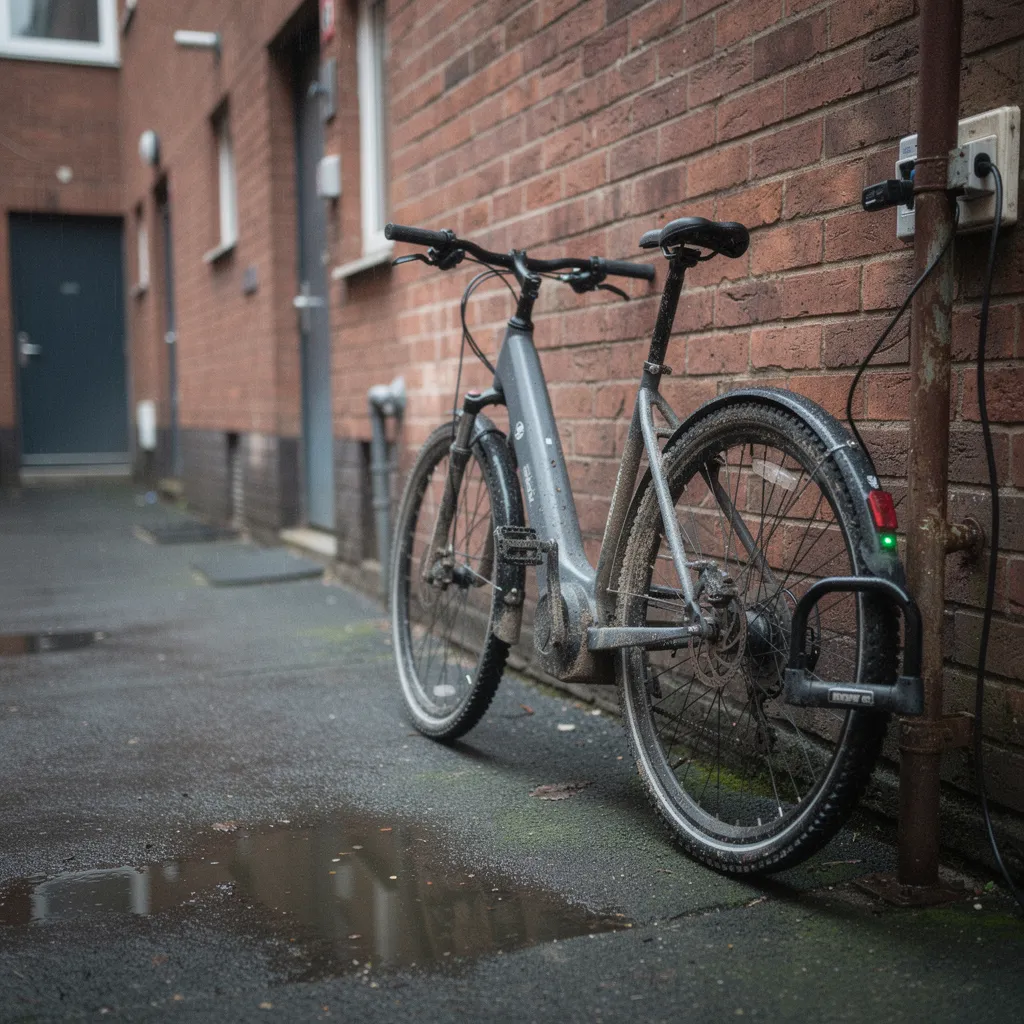
Locks aren't optional on a city bike. A quality U-lock plus a secondary cable runs $60 to $120. Buying a $40 lock for a $1,500 bike is a poor financial decision - bike theft is a real and well-documented urban problem, and insurance rarely covers it without a specific rider on a renter's or homeowner's policy.
Insurance is the most commonly skipped cost. Some homeowner and renter's insurance policies cover e-bikes up to a certain value, but many cap coverage at $500 or exclude motorized bikes entirely. A standalone e-bike insurance policy runs roughly $100 to $200 per year depending on bike value and location. That cost is worth calculating before purchase - not after a theft.
Maintenance is predictable but real. Brake pad replacement, chain wear, tire punctures, and occasional cable adjustments cost roughly $75 to $200 annually if the bike is ridden daily. A mid-drive motor's chainring and chain wear faster than on a hub-drive bike because the motor loads the drivetrain directly.
Battery replacement is the largest long-term expense. Most e-bike batteries hold full capacity for 500 to 800 charge cycles, after which range degrades noticeably. Replacement batteries for mid-range bikes cost $250 to $500 depending on capacity and sourcing. At daily riding, that could arrive in three to five years.
Finally, state and local rebate programs can materially change the net cost - and many buyers miss them entirely. According to afdc.energy.gov, Denver's e-bike rebate program offers $400 for any buyer and $1,200 for income-qualified residents. California launched a program in 2023 offering $1,000 vouchers for standard e-bikes and up to $1,750 for adaptive or cargo models for eligible residents. The Colorado Energy Office also launched a $12 million statewide rebate program for low- and moderate-income residents in 2023. A $1,500 bike after a $1,000 California voucher is a $500 bike - a completely different financial calculation. Check afdc.energy.gov's state-by-state resource before buying.
What People Get Wrong
The cheapest bike is the best deal. It's not. A $750 no-name e-bike with a low-grade lithium battery and no UL certification for the charging system is a poor value and in some cases a fire risk. The Consumer Product Safety Commission has issued warnings on uncertified e-bike batteries. Buying a bike with a UL 2849 certified electrical system costs more upfront and is worth it.
A higher motor watt rating means a better bike. Motor wattage is one input, not a quality signal on its own. A well-engineered 250W mid-drive motor with quality sensors outperforms a poorly designed 750W hub motor on hilly urban terrain. Controller quality, torque sensing versus cadence sensing, and thermal management matter more than peak wattage numbers in marketing materials.
Charging is expensive and will raise the electricity bill. This is wrong by a wide margin. Afdc.energy.gov data shows charging costs below $50 per year for daily riders. The per-mile energy cost of an e-bike is far below any motorized alternative, including public transit on a per-trip basis over a full year of ownership.
Any e-bike can go anywhere a regular bike goes. This is legally incorrect in many cities. Class 3 e-bikes (up to 28 mph) are restricted from bike paths in several states and municipalities. Class 1 bikes have the broadest access. Wikipedia notes that e-bikes are typically motor-powered up to 25 to 32 km/h, with some reaching 45 km/h (28 mph), and local access rules vary significantly by speed class. Check local ordinances before purchasing a Class 3 model for city use.
The Limits of This Advice
The figures in this article are approximate ranges drawn from publicly available data and are provided for general orientation only. Prices, rebate program availability, income thresholds, and local regulations all change, sometimes within a single budget cycle. A rebate program cited here may be fully subscribed or modified by the time this article is read.
This article doesn't constitute financial, insurance, or legal advice. For questions about whether an e-bike purchase qualifies for a specific local rebate, consult your state energy office or local transportation department directly. For insurance coverage questions, speak with a licensed insurance agent who can review your specific policy. For tax treatment of any rebate or employer transit benefit, consult a qualified tax professional. Get the right professional advice for your own situation before making a significant purchase decision.
References
- https://afdc.energy.gov/conserve/active-transportation
- https://en.wikipedia.org/wiki/Electric_bicycle
Disclaimer
This article is for general informational purposes only and isn't financial, investment, insurance, or tax advice. Rates, fees, and rules change and vary by lender and situation. For decisions about your own money, consult a qualified financial professional.