Financial Checklists Before Buying a Vehicle: here's what actually helps. Before you buy a car, take the time to do a little research. There are some things you should always check before signing a contract.
What You Need to Know Before Buying a Vehicle
Buying a car can be a stressful process, especially if you’re not familiar with the steps you need to take. Here are some things to consider when purchasing a new or used car.
Check the VIN for Recall Information
The U.S. Department of Transportation’s Vehicle Safety Hotline at 1-888-327-4236 provides information on recalls and safety issues for motor vehicles. You can also search recalls by VIN on the NHTSA recalls page.
Look Up the Vehicle’s Title History
There are several websites that provide information on a vehicle’s title history, including the National Motor Vehicle Title Information System (NMVTIS) at vehiclehistory.bja.ojp.gov. These sites offer accurate information about a vehicle’s title, odometer data - and certain damage history.
If you want to look up a vehicle’s title history through the NMVTIS, expect to pay up to $4 per report.
Get a Vehicle History Report
A vehicle history report can help you identify potential issues with a used car. Some of the things a vehicle history report might reveal include flood damage, accidents, and previous ownership details.
The National Insurance Crime Bureau (NICB) maintains a free VINCheck database that includes flood damage and theft records.
Read the Buyers Guide
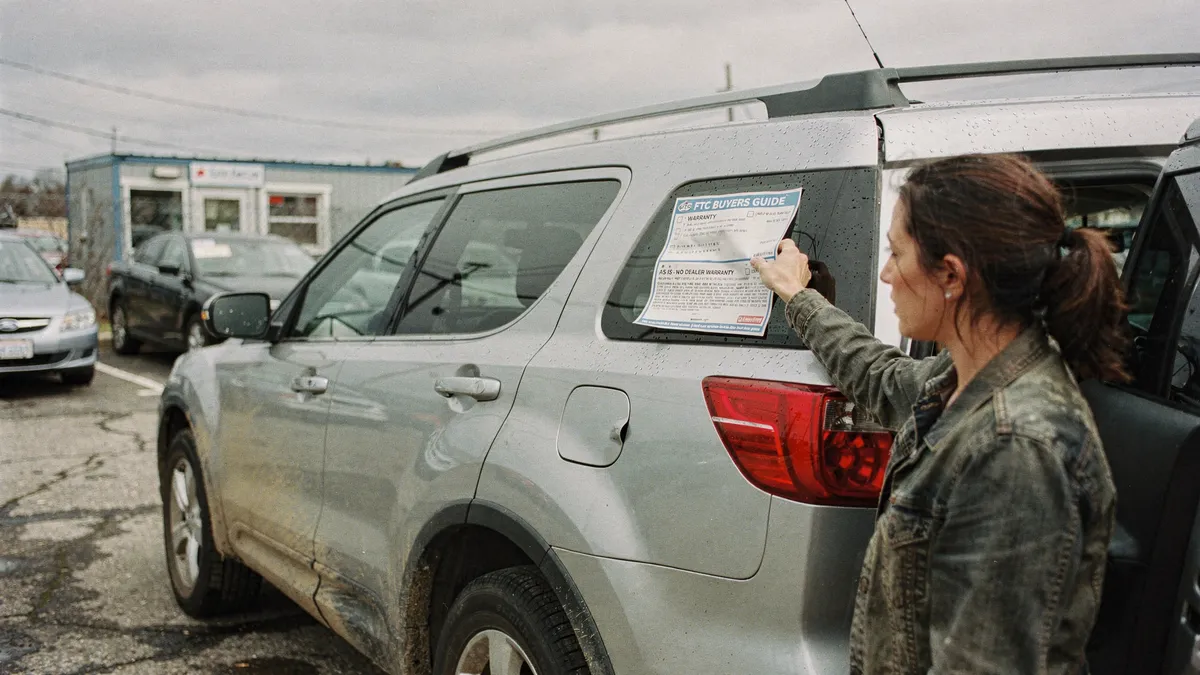
The Buyers Guide is a pamphlet that must be displayed prominently and conspicuously on or in a vehicle when a car is available for sale. It contains important information about the car, such as its warranty - the dealer’s contact information, and the seller’s responsibilities.
The Buyers Guide must be displayed prominently and conspicuously on or in a vehicle when a car is available for sale, meaning it must be in plain view and both sides must be visible.
Consider Your Budget
When buying a car, it’s important to consider your budget. The average cost of owning a car is $11,577 annually or $965 monthly - according to AAA's 2025 Your Driving Costs study.
Here are some factors to consider when determining how much you can afford to spend on a car:
- Monthly Payment: The average monthly payment on a new car was $767 in the fourth quarter of 2025, according to Experian.
- Fuel Costs: Drivers overall pay an average of 13 cents a mile for fuel, based on average prices for regular unleaded gas and electricity per kilowatt hour during a 12-month period ending in May 2024.
- Insurance: The average annual premium for full-coverage insurance runs car owners $1,694, according to AAA.
- Maintenance and Repairs: Regular maintenance and repairs can be expensive - especially for older cars.
Know Your Rights
As a consumer, you have rights when it comes to buying a car. Here are some things to keep in mind:
- The Used Car Rule: Car dealers who sell, or offer for sale, more than five used vehicles in a 12-month period must comply with the FTC's Used Car Rule. This rule requires dealers to provide a Buyers Guide, which must be displayed prominently and conspicuously on or in a vehicle when a car is available for sale.
- Servicemembers: The CFPB is working to protect servicemembers from costly auto loans and wrongful repossessions.
- Complaints: The CFPB forwards complaints to companies and works to get a response - generally within 15 days.
Conclusion
Before you buy a car, take the time to do your research. Look up the vehicle’s title history and get a vehicle history report. Read the Buyers Guide and consider your budget. Finally, know your rights as a consumer. By taking these steps, you can avoid making costly mistakes and ensure a smooth and stress-free car-buying experience.
References
- Motor Vehicle Title Information System - vehiclehistory.bja.ojp.gov
- $11,577 - nerdwallet.com
Further reading
- https://www.consumerfinance.gov/consumer-tools/auto-loans/
- https://www.consumerfinance.gov/ask-cfpb/what-should-i-know-before-i-shop-for-auto-loan-at-a-bank-credit-union-dealership-or-other-lender-en-755/
- https://www.nerdwallet.com/auto-loans/learn/total-cost-owning-car
- https://vehiclehistory.bja.ojp.gov/nmvtis_buyingtips
Disclaimer
This article is a personal reflection shared for general informational purposes only. It is not financial, investment, insurance, or tax advice. For decisions about your own money, please consult a qualified financial professional.