If you're looking for a way to turn your kitchen scraps and yard waste into nutrient-rich soil for your garden, then you're in luck! Composting is a great way to reduce your household waste and help the environment. Only a small fraction of wasted food ever gets composted in the United States, which means a lot of potential soil goes to the landfill instead.
Garden Compost Systems For Backyard Use: How to Start Your Own Garden Compost System
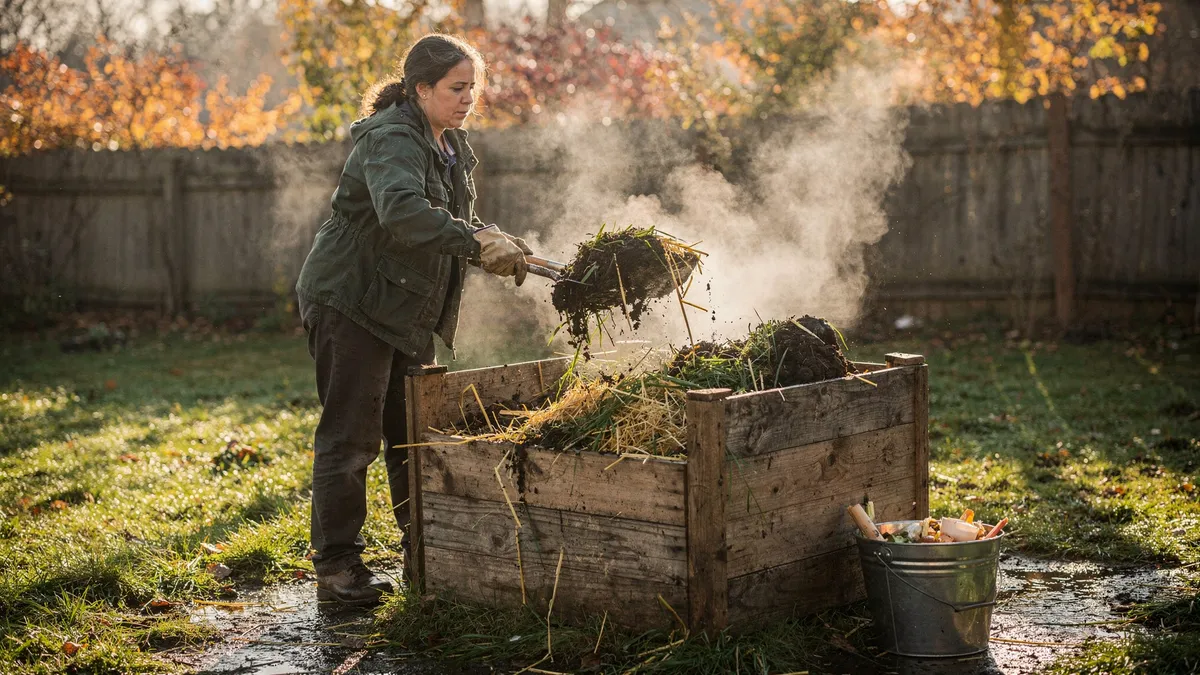
Starting your own garden compost system is easier than you might think. All you need is a simple open bin or pile, plus some water, and you can create soil-like compost in 6 months to a year for yard waste. You can also add kitchen scraps to the pile to speed up the process.
The thing behind successful composting is to maintain the right balance of materials. According to the U.S. Environmental Protection Agency, composting basics include one part greens and one part browns. Greens are fresh - nitrogen-rich materials like grass clippings, vegetable scraps, and coffee grounds. Browns are dry, carbon-rich materials like dried leaves, straw - and shredded newspaper.
To start your compost pile, layer greens and browns in a 1:1 ratio. Then, add water until the pile is moist but not soggy. The pile should be between 40 and 60 percent water. As the pile breaks down, it will heat up and begin to compost. Turning the pile every few weeks can help speed up the process.
Vermicomposting: A Great Alternative for Small Spaces
For those with limited space, vermicomposting is a great alternative to traditional composting. Vermicomposting uses worms to break down organic materials and produce compost. Worms are added to a container filled with bedding material - such as shredded newspaper or cardboard. Kitchen scraps and other organic materials are added to the container, and the worms eat the scraps and produce compost.
Vermicompost products have many applications, including home gardening, landscaping, turfgrass - golf courses, viticulture, DOT projects, use in potting soil for the horticultural industry, and in agriculture. Vermicomposting is a great option for apartment dwellers or anyone with limited outdoor space.
When to Start Your Compost Pile
Autumn is a great time to start a compost pile - as there are plenty of fallen leaves available. However, you can start a compost pile at any time of year. Just be sure to maintain the right balance of materials and keep the pile moist.
Permits and Regulations
If you live in a community with composting regulations, you may need to obtain a permit before starting your compost pile. Check with your local government to see if there are any regulations in place. In the County of San Diego, for example, mid-scale composters can gain extra income by selling finished compost - but there are limitations on the volume that can be sold annually.
Reduce Methane Emissions by Composting
When food and other organic materials decompose in a landfill where anaerobic (without oxygen) conditions are present, bacteria break down the materials and generate methane, a powerful greenhouse gas. By composting, you can reduce the amount of organic materials sent to landfills and help reduce methane emissions.
Finished Compost Uses
Finished compost can be used to improve soil quality in gardens, pastures - and markets. It increases organic matter content in the soil, which can improve soil structure, water retention, and nutrient availability.
Conclusion
Composting is a great way to reduce household waste and help the environment. With a simple open bin or pile, plus some water - you can create soil-like compost in 6 months to a year for yard waste. For those with limited space, vermicomposting is a great alternative. Just be sure to maintain the right balance of materials and keep the pile moist. By composting, you can help reduce methane emissions and improve soil quality in your garden, pastures, and markets.
References
- 60 percent - composting.ces.ncsu.edu
- composters can gain extra income - sandiegocounty.gov
- and other organic materials decompose - epa.gov
Further reading
- https://www.epa.gov/facts-and-figures-about-materials-waste-and-recycling/national-overview-facts-and-figures-materials
- https://www.epa.gov/sustainable-management-food/composting
- https://www.familyhandyman.com/article/what-i-wish-i-knew-before-starting-a-compost-bin/
- https://www.familyhandyman.com/article/what-to-know-about-composting/
Disclaimer
This article is a personal reflection shared for general informational purposes only. It is not medical or health advice, and it is not a substitute for care from a qualified professional. Please talk to your doctor about your own health.