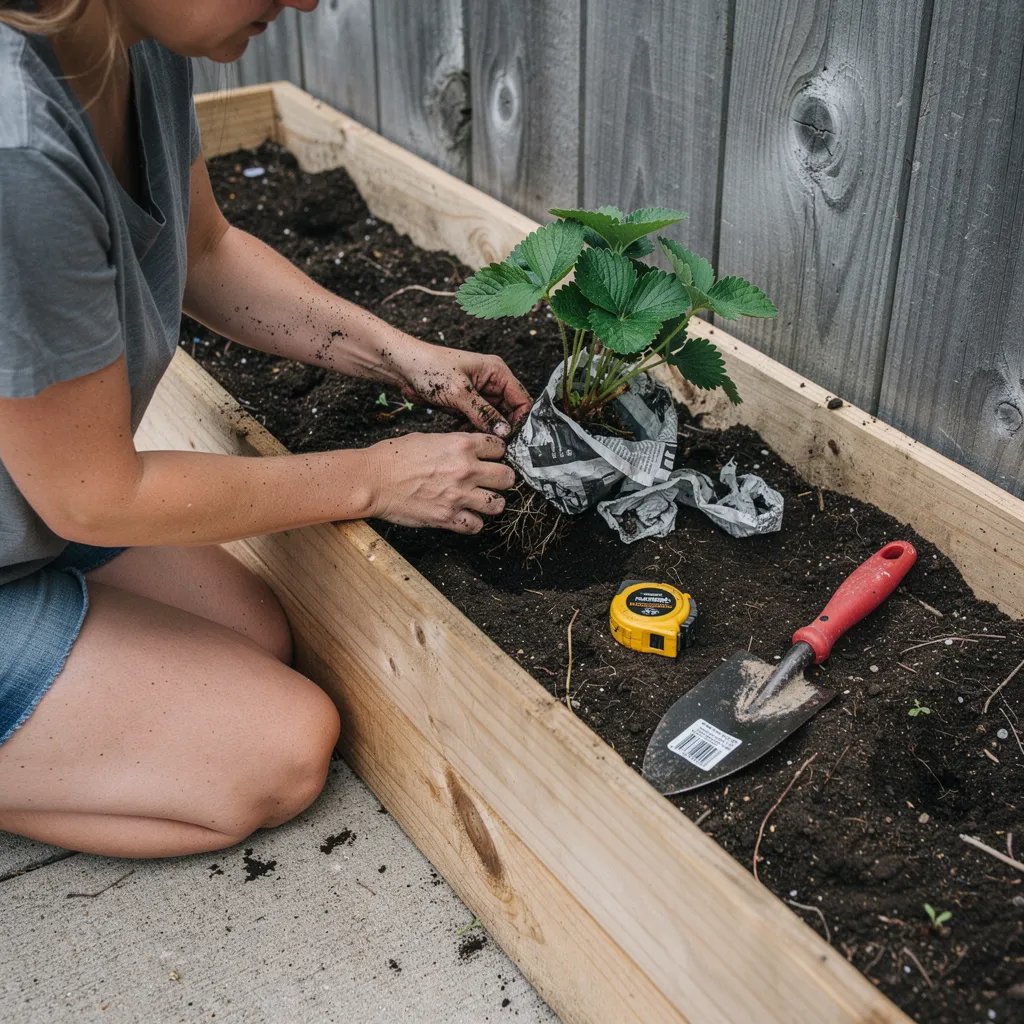
She pulled the metal tongue all the way out and let it hang over the dirt, which was the color of old cardboard and smelled like nothing. Twelve inches. She said it out loud, the way you read a diagnosis back to a doctor to make sure you heard it right. Then she folded the tape back into its yellow shell and stood there holding it with both hands.
She drove home with the bags slumped against each other in the trunk like tired passengers, the basil seeds loose in the cupholder beside a receipt for thirty-seven dollars. The strawberry starts rode in a cardboard flat, their roots wrapped in damp newspaper - each one smaller than her fist. She carried everything in two trips and lined it all up along the fence: the dark bags, the flat, the trowel with its red handle still stickered, the seed packet with its photograph of leaves so green they looked made up.
She tapped the last plank flush with the heel of her sneaker, three times - the way you knock on a door you're not sure is answered. The soil she'd worked in was dark and damp and she pressed each seed with her thumb the way you press a doorbell you know is broken - once more, harder, just to be sure. The packet said four inches apart and she gave them two, because the bed was the size of a welcome mat and she had eleven packets and the whole rest of a Sunday still ahead of her.
She counted them without meaning to - seven, crowded on one stem - each one the size of a shooter marble and the same cold green as the inside of a cucumber. The basil had gone to flower, tall and strange, the leaves gone small and serrated at the top like something trying to become a different plant entirely. She put the tomato back where she found it and wiped her hand on her shorts, leaving a faint smear the color of grass stain. Thirty-seven dollars, she thought - looking at the trowel, and then she thought it again.
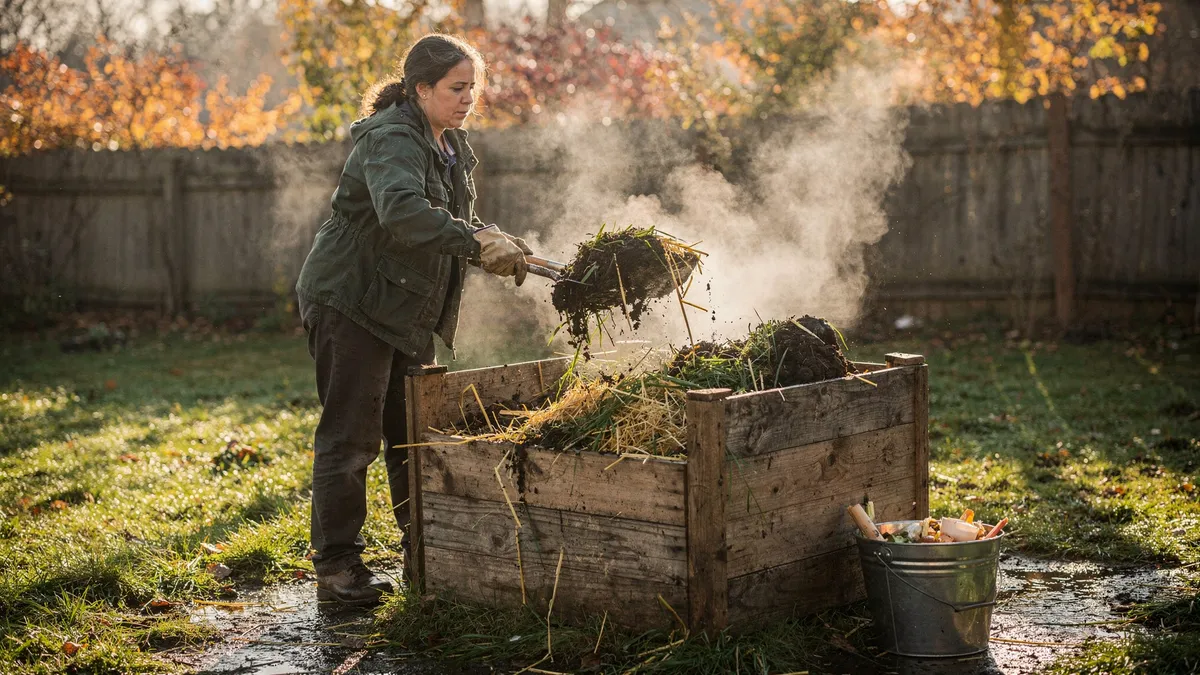
She cut the basil at the second node, the way the video said, leaving two small stubs that looked like the start of an argument. The cuttings went in the compost bin, a faint green smell rising from them in the heat. She tore the undershirt into strips and looped them around the tomato cage in figure eights - the cotton gone soft from washing, and where it pulled the stem upright the plant leaned into it the way a person leans into a doorframe when they're tired. The green tomatoes hung where they'd always been, seven of them, unchanged, not caring at all what she'd done.
She moved it twice before she left it alone - first to the left where the morning light hit it square - then back to the right next to the trowel, whose red handle had faded one shade in the weeks outside. The tomato sat there the color of a stop sign, round and unremarkable, the size of something you'd lose in a coat pocket. She stood at the glass with her coffee going cold and looked out at the twelve inches of dirt, which had gone dark from last night's rain - and at the six green tomatoes still hanging where they'd always been, not caring, as usual, what she thought about any of it.
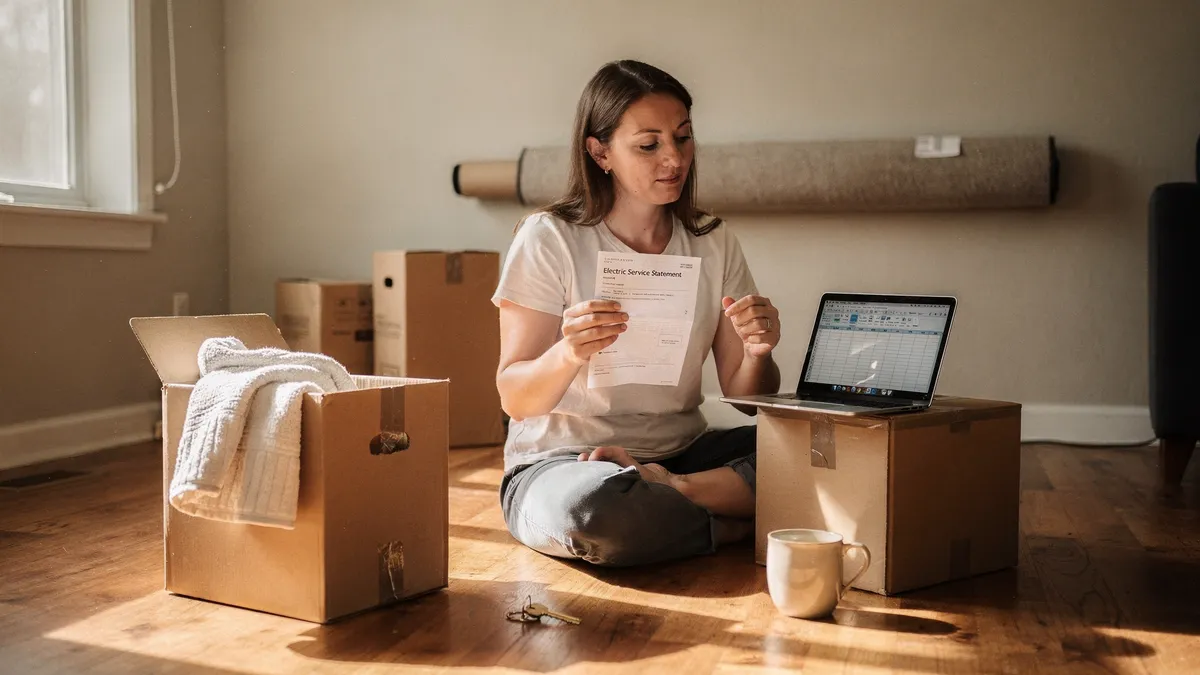
She brought the red tomato inside and set it on the cutting board next to the bread knife, and then she didn't cut it. It sat there for three days - moving once to make room for the electric bill, until the skin near the stem went soft and she pressed it with her finger and left a small dent that didn't come back. She cut around that part, quartered what was left, and ate it standing over the sink with salt from the blue box, looking out the window at the six green ones still on the vine - which hadn't moved, which wouldn't move, which were going to do whatever they were going to do entirely without her opinion on the matter.
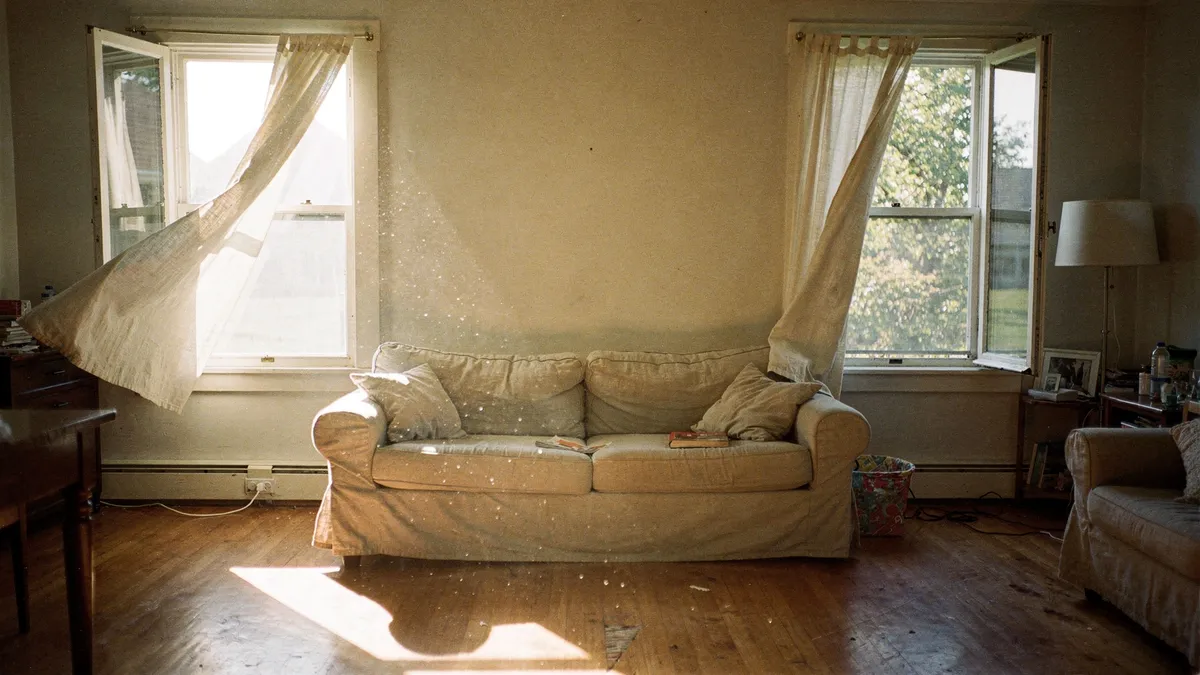
She woke up on a Thursday to find two of them had turned overnight, the skins gone red and tight while she slept, and she stood in the doorway in her socks with her coffee not yet made and looked at them the way you look at a missed call from a number you recognize. She picked the larger one - which fit exactly in her palm and was still cool from the dark hours, and carried it inside, and set it next to the bread knife, and then stood there a moment with both hands free. The smaller one she left on the vine, which swayed once in the same small wind that moved the curtain through the open screen - and then went still.
She brought out the seed catalog in October and sat with it at the kitchen table, a pen in her hand, the red-handled trowel clean now and hanging on the hook by the back door where she'd put it in September. The pages fell open to peppers, which she'd never grown, and she circled a variety called Shishito with the pen before she'd fully decided - the ink a little wet where her wrist had dragged. She measured the bed again the next morning - twelve inches, same as before - and wrote the number in the margin next to the circled pepper, pressed down hard, the way you underline something you already know.
She ordered the Shishito seeds in November and they arrived in a small envelope she almost threw away with the electric bill, the two of them so alike she had to look twice at the return address - which said a town in Vermont she'd never heard of. She set the seed envelope on the windowsill above the sink, where it stayed through two rainfalls, the paper going soft at one corner from the steam off the kettle. When she finally opened it with the bread knife she counted the seeds into her palm - fourteen, smaller than apple seeds, lighter than she expected anything that needed twelve inches of dirt to become.
She set the fourteen seeds in the shallow bowl she used for loose change - covered them with a damp paper towel folded in half, and slid the bowl onto the top of the refrigerator next to a dead battery and a coupon for fifteen percent off she'd been meaning to use since August. Three mornings she stood on her toes to check, the linoleum cold through her socks, tilting the bowl toward the light from the window to see if anything had split. On the fourth morning one of the seeds had sent out a thread so fine she almost wiped it away with her thumb before she understood what it was.
Further reading
- https://yardandgarden.extension.iastate.edu/how-to/all-about-container-gardening
- https://www.climatehubs.usda.gov/hubs/international/topic/urban-agriculture
- https://pmc.ncbi.nlm.nih.gov/articles/PMC9229094/
- https://pmc.ncbi.nlm.nih.gov/articles/PMC8423299/
Disclaimer
This article is a personal reflection shared for general informational purposes only. It is not financial, investment, insurance, or tax advice. For decisions about your own money, please consult a qualified financial professional.