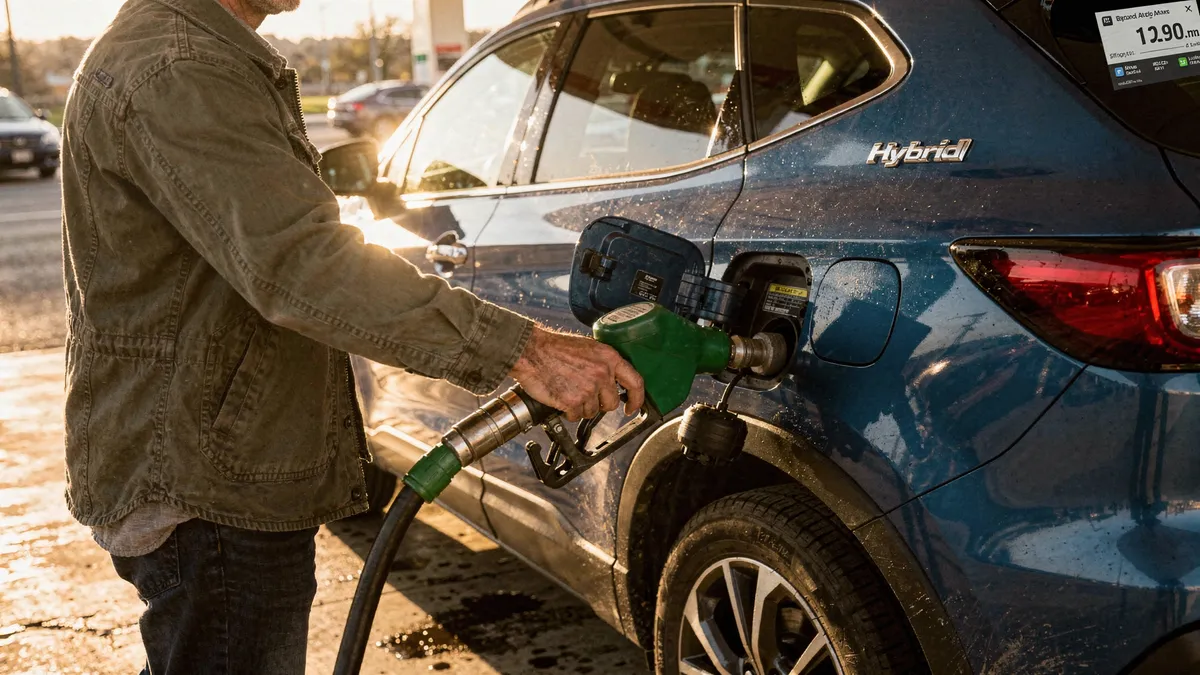
When you're shopping for a car, you may be wondering if hybrid cars offering lower fuel costs are worth the extra initial investment. With a hybrid vehicle, you'll pay more upfront, but you could save money over the long run thanks to better fuel efficiency.
How Much More Will You Pay Upfront for a Hybrid?
If you're buying a hybrid, you'll likely pay several thousand dollars more upfront than you would for a comparable non-hybrid model. The good news is that this additional cost has been steadily dropping. Through the 2010s, hybrid prices and the price gap relative to conventional cars fell steadily as battery costs came down.
While some hybrid models may cost a bit more than their gasoline counterparts, there are many that won't set you back too much at all. Some models, such as the Ford Escape Hybrid, have been priced close to their non-hybrid equivalents.
Will Your Hybrid Car Save You Money?
For those hybrid models that do cost more than their non-hybrid counterparts, you can expect to see the higher price offset by the lower fuel costs over time. According to an analysis by Consumer Reports, most hybrids start paying for themselves in just a few years.
That analysis is several years old now, and some of the models it named, including the Chevrolet Malibu Hybrid and the Honda Clarity, have since been discontinued and are only available used. With that caveat, it ranked these as the strongest hybrid deals for drivers covering fewer than 12,000 miles per year:
- Ford Escape Hybrid
- Chevrolet Malibu Hybrid
- Honda Clarity Plug-In Hybrid
- Toyota Camry Hybrid LE
The report also found that the following hybrid vehicles have payback periods exceeding five years:
- Honda Accord Hybrid
- Hyundai Tucson Hybrid
How Much Can You Save on Fuel Costs?
The Toyota Prius, for example, carries EPA combined ratings in the mid 50s mpg. Many owners report real-world figures somewhat below the official numbers, so treat the label as a comparison tool rather than a guarantee.
This can really add up over time.
According to the EPA, the label shows the estimated fuel cost over a five-year period for the vehicle compared to the average new vehicle, based on driving 15,000 miles per year. This can help you compare the fuel costs of different models before you buy.
What Other Benefits Come With a Hybrid Car?
In addition to saving money on fuel, hybrids offer a number of other benefits. For example - they produce less greenhouse gas emissions than conventional vehicles, which can help improve air quality. They also have lower maintenance costs because they have fewer moving parts than conventional vehicles. And because they can operate on electricity alone, they can help reduce noise pollution.
Also, many hybrid vehicles come with additional features that can enhance your driving experience. For example, the extra power provided by the electric motor in a hybrid can potentially allow for a smaller engine - and the battery can also power auxiliary loads and reduce engine idling when stopped.
Overall, hybrid cars offer a number of benefits, including lower fuel costs, reduced emissions, lower maintenance costs - and enhanced driving experiences. While you may pay more upfront for a hybrid, you can expect to save money over the long run thanks to better fuel efficiency. Additionally, the added benefits of hybrids can further offset the higher initial cost.
References
- 15,000 - epa.gov