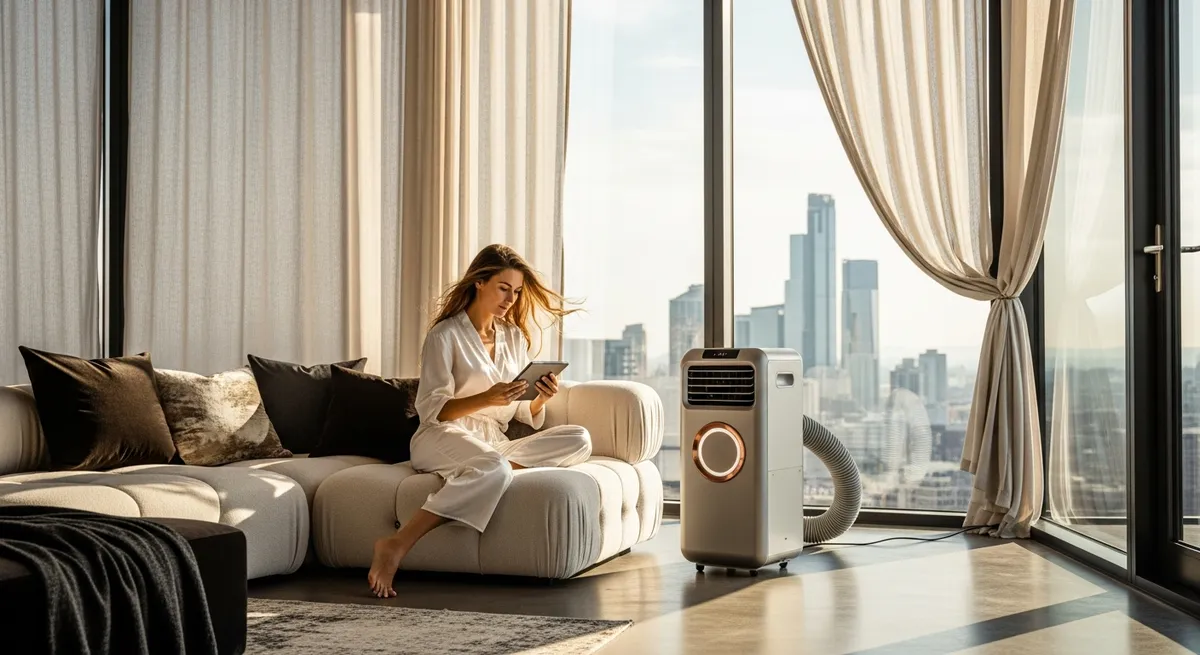
Sunlight, hot and relentless, pours through wide apartment windows that lack the structural ledge required for a heavy, traditional cooling unit that your landlord likely forbids. Portable air conditioners solve this specific problem, and recent models are meaningfully more efficient than the ones you remember. You're sitting in a third-floor unit with a cross-breeze that stopped being refreshing three hours ago. The heat isn't just an annoyance; it's a productivity killer that turns your home office into a sauna. You need a solution that fits your lease and your budget. Newer technology offers better ways to stay cool without losing your security deposit. Most people don't realize how much these units have changed over the last four years. It's time to look at the numbers.
Why Portable Air Conditioners for Apartments in 2026 Solve Renter Problems
Because many property managers strictly forbid heavy window units that risk damaging frames - or falling onto sidewalks - a liability nightmare in dense cities, these portable units remain the only legal cooling option for roughly 44 million renter-occupied housing units across the country. These self-contained machines require zero permanent installation. You just wheel them in and plug them into a standard outlet. The Department of Energy, which operates out of a massive concrete headquarters in Washington D.C., recently updated its testing standards to reflect how you actually use these machines in a humid bedroom. It's a major shift. The old ratings used to overestimate cooling power, leaving you sweaty and frustrated while the machine hummed away in the corner. Now, the ratings are honest.
Hose length remains a key technical limit for your setup. Most standard kits only reach about five feet. You must position the chassis near a window to exhaust hot air - though newer high-velocity fans allow for slightly more flexibility in your room layout than the clunky models you saw back in 2022. You don't want to stretch the hose too far. If you do, the heat leaks back into your space. You can't fight physics. A shorter, straighter hose ensures the hot air actually leaves your living room instead of just warming up the plastic tube. You should also consider the height of your windows. If your window is unusually high, you might need a small platform for the unit to sit on so the hose reaches effectively. It's a simple fix for a common headache.
Selecting the Right BTU for Your Room Size
Measure your window opening before you buy any specific exhaust kit for your bedroom. Sliding glass doors and crank-out casement windows require specialized seals that often cost an extra fifty dollars, according to retail data from major home improvement centers. Check the BTU rating for your space. The Association of Home Appliance Manufacturers, a trade group based in D.C. that represents the companies making these machines, suggests you need about 20 BTU for every square foot of living space. If you buy a unit that is too small, it will run constantly without ever hitting your target temperature. That wastes money. If you buy one that is too big, it won't remove enough humidity, leaving you feeling cold and clammy like you're sitting in a cave. You have to get the sizing right.
Dual-hose models prevent the negative air pressure that typically pulls warm air into your living room from other parts of the building. This design choice improves cooling speed significantly in most standard apartment layouts. Faster cooling means lower monthly electric bills. You see, a single-hose unit is actually fighting itself. It takes some of the cold air it just produced and uses it to cool down the internal machinery before blowing it out the window. That creates a vacuum. It pulls hot air from the hallway or the kitchen right back into your cool bedroom. It's a cycle of waste that you can avoid by looking for a machine that has two separate hoses. One hose pulls in fresh air from outside, and the other shoots the heat out. It's much smarter.
Modern Efficiency and Sound Levels in Small Spaces
Modern machines now feature dual-hose technology as a standard design. This specific setup, which pulls in outside air to cool the internal compressor while exhausting hot air through a separate tube, improves your cooling speed, reduces vacuum pressure - and lowers energy waste. Portable air conditioners are generally less energy-efficient than window units or central air systems, often leading to higher utility bills unless used strictly for zone cooling in place of a larger system. You have to be strategic. Energy Star, a program run by the Environmental Protection Agency to help you save money on utilities, has started certifying more of these portable units because their efficiency has improved so much. You're no longer just throwing money out the window. You're making a calculated investment in your own comfort.
Inverter technology is the real game changer for your sleep. Instead of cycling entirely on and off, the motor slows down to maintain a steady temperature without the massive power spikes typical of older hardware. Energy use can drop by as much as a third. You avoid the annoying clicking sound. You know that sound - the one that wakes you up at 3:00 AM just as the compressor kicks back into high gear. It sounds like a jet engine starting up in your closet. With an inverter, the motor just hums at a low, consistent frequency that blends into the background noise of the city. It's the difference between a restful night and a groggy morning. You deserve to sleep through the night without a machine barking at you every twenty minutes.
Managing Condensation without Floor Drains
Are you tired of emptying heavy water tanks every four hours in the humidity? Most modern units now feature auto-evaporation technology. This system recycles moisture from the air to cool the internal coils, which is then exhausted as vapor through the window hose so you never touch a drain plug. You can finally stop worrying about the machine shutting off in the middle of a heatwave because the bucket is full. The American Council for an Energy-Efficient Economy, a non-profit group that researches power usage, notes that these self-evaporating systems are becoming standard because they improve heat exchange. It's a win for you and a win for your electric bill. You just set the temperature and forget about it.
While premium 'ultra-quiet' models currently reach 42-45 decibels on low settings, the average portable AC sound level remains between 52 and 60 decibels, which is quiet enough for you to sleep through a hot July night. Forty-two decibels is incredible. Can you imagine sleeping in silence while it stays seventy degrees? You could actually hear your own thoughts for once. Most older units averaged closer to 65 decibels, which is roughly the volume of a loud conversation happening three feet away from your head. Moving down to 45 decibels is like moving from a busy restaurant to a quiet library. It's a physical relief you can feel in your chest. You don't realize how much stress that background noise adds until it's finally gone.
Portability and Off-Season Storage Challenges
Do you have a closet for storage? Can you lift eighty pounds alone? While these machines have wheels for easy movement across your hardwood floors, they remain heavy enough that moving them between rooms requires a second set of hands or a very sturdy dolly to avoid injury. You have to plan for the winter months. These units don't just disappear when the leaves start to turn. They're bulky. They're heavy. They take up about three square feet of floor space. If you live in a studio apartment, that's a significant chunk of your real estate. You might want to keep the original box for storage, as it makes it easier to stack things on top of it in your closet without damaging the plastic chassis. Just make sure you drain any remaining water before you pack it away for the season.
You also need to think about the aesthetics of your room. These aren't exactly art pieces. They're big white or grey boxes with thick plastic tubes coming out the back. You can try to hide them behind a chair or a plant, but they're always going to be there. Some newer models have a more streamlined look, but they're still industrial machines at heart. You're trading a bit of floor space for the ability to actually breathe when the humidity hits 90 percent. For most people, that's a trade they're willing to make every single time. You just have to be honest with yourself about how much gear you want in your living room. If you can handle the footprint, you can handle the heat.
Installation for Tricky Casement Windows
White plastic panels slide into the gaps of your double-hung window while sticky foam tape seals out the afternoon heat and potential pests trying to enter from the street. You tighten the wing nuts to secure the exhaust hose in place. It takes roughly fifteen minutes. But what if you have windows that crank out? That's where it gets tricky. The National Association of Realtors, a large trade group based in Chicago, reports that more modern apartment buildings are using casement or awning windows for better ventilation and style. These windows don't work with standard slider kits. You have to buy a fabric seal that uses velcro to attach to the window frame and the glass. It looks a bit like a tent, but it works. You zip the hose into the opening and you're good to go.
You should also double-check your lease before you stick anything to the frames. Some landlords are very picky about adhesive residue. You might want to use a painter's tape that won't leave a mark when you pull it off in October. You also need to make sure the hose is angled down so rain doesn't run into the machine. It's a small detail that can save you a lot of trouble. If you set it up correctly on the first try, you won't have to touch it again until the first frost. You can just enjoy the cool air and the fact that you didn't have to hire a contractor to drill holes in your walls. It's your space, and you're finally in control of the climate.
Renter Cheat Sheet
Cool Air, No Contractor
Portable units provide the most flexible cooling solution for modern renters who can't install permanent fixtures. By selecting a dual-hose inverter model, you gain maximum energy savings and a quieter living environment. Check your square footage requirements before you make a final purchase to stay cool all summer long. You've seen the data. You know the pitfalls of the single-hose models and the benefits of the newer inverter tech. Now you just have to decide if that peace and quiet is worth the investment. For most of us staring down another record-breaking summer, the answer is a resounding yes. You don't have to suffer through another heatwave. You have the tools to stay comfortable on your own terms. It's time to take back your summer.