Reading Daily Can Improve Learning and Focus because digital distractions have shattered your attention span and left your memory feeling fragmented. Fortunately, a structured reading routine will help you rebuild neural pathways and reclaim the mental clarity you need for success.
The Cognitive Science of Attention
Your brain is literally being rewired for distraction every time you check a notification. The Stanford University School of Medicine, which is a leading research center based in Palo Alto, found that heavy media multitaskers - people who jump between apps every few seconds - perform significantly worse on simple memory tests than those who focus on one task at a time. I have seen the same pattern in corporate training sessions where professionals cannot go five minutes without a screen. Researchers noted that the heavy multitaskers struggled to filter out irrelevant information. This constant context switching creates a mental lag that reduces your learning efficiency over time. You need a dedicated focus anchor to stop the cognitive slide.
This cognitive decline isn't permanent. You can reverse the damage through deep reading. The act of following a complex narrative for thirty minutes, which is roughly the time most people spend on a lunch break, creates a state of flow that mimics the effects of meditation. It gives you a specific mental workout that strengthens the prefrontal cortex against the pull of digital alerts and helps you regain control over your attention span. I believe your focus is your most important asset in the modern economy.
The Neurological Price of the Digital Skim
When you engage with a book daily, your brain builds a structural bridge between new information and existing knowledge - a process that the National Institutes of Health has tracked through functional MRI scans showing increased connectivity in the left temporal lobe. The NIH, a federal agency headquartered in Bethesda, discovered that this isn't just a feeling. The scans revealed that the brain's internal architecture changes when you stop scanning and start processing. This increases memory retention because you aren't just seeing words; you're building a mental model. Is your focus worth thirty minutes of quiet time in 2026 to make sure your memory stays sharp?
Why does a physical book beat a screen for deep work? It's about the spatial markers. Researchers at the University of Stavanger discovered that readers who use paper books remember chronologies better because the tactile experience - the weight of pages and the physical movement of the hand - provides anchors for the memory that a glass screen can't replicate. When you feel the thickness of the book in your left hand decreasing, your brain uses that physical progress as a marker. Reading Daily Can Improve Learning and Focus because it engages more of your senses in the learning process. A digital interface offers no such anchors for your cognitive performance.
The Hidden Costs of Mental Fragmentation
I recently looked at how often professionals get interrupted at work, and the data is quite staggering. Every interruption takes about twenty minutes to recover from fully. Reading Daily Can Improve Learning and Focus by training you to ignore those interruptions. It is a form of deep work that builds your cognitive performance by training your executive function. You are essentially teaching your brain to stay in one place for an extended period. This practice improves your learning efficiency because it allows you to dive deeper into complex subjects without getting distracted by the noise of a digital world designed to keep you shallow.
Success in a knowledge economy depends on your ability to process hard things fast. Deep reading gives you the stamina to stay with a problem longer than your peers, which is a rare skill in a world where attention spans for digital content are measured in seconds. I want you to have this unfair advantage in your professional life.
Breaking the "Too Busy" Myth with Data
You don't need to read a hundred books a year to see a change in your performance. A study from the University of Sussex, located in the United Kingdom, showed that just six minutes of silent reading can sharply reduce stress levels, a bigger drop than listening to music or going for a walk, making it the most efficient way to reset your nervous system. Six minutes total, which is about the time it takes to brew a pot of coffee. I often recommend this to colleagues who feel overwhelmed by their digital inbox. Short bursts of quality text work better for your cognitive performance than long hours of scrolling.
You sit at your desk with coffee in hand while the blue light of your phone demands that you check an email that doesn't actually matter for your long-term career goals. You set the phone in a drawer and pick up a paperback instead. Ten minutes pass. You feel the physical shift as your heart rate slows and your mind begins to latch onto a single, coherent stream of thought. This is the beginning of reclaiming your mental clarity.
Strategic Habit Building for Professionals
Put your book on your pillow so you see it before you reach for your phone at night. Habit experts suggest that physical cues are more effective than willpower because they reduce the friction of starting, a method that successful executives use to make sure they hit their daily learning targets without overthinking the process. Reading Daily Can Improve Learning and Focus if you treat it like an appointment you can't miss. Visual cues beat mental lists every time.
Can you really learn better? Does your focus improve that fast? Data from the Yale School of Public Health indicates that regular readers tend to live measurably longer than non-readers, largely because the cognitive load of reading improves brain health. The Yale study followed thousands of people for over a decade and found that those who read books had a meaningfully lower mortality rate over the following decade. I find it remarkable that a simple book can add years to your life while protecting your cognitive performance from age-related decline. Your memory retention in 2026 depends on the habits you build today.
The Long Term Cognitive Benefits
If you treat your brain like a muscle - providing it with the heavy resistance of a difficult non-fiction text or the imaginative labor of a complex novel - you will find that Reading Daily Can Improve Learning and Focus in ways that a simple five-minute app can never copy. Your concentration becomes a wall. It blocks out the noise of a digital world designed to keep you distracted. I have noticed that those who break the reading barrier often report feeling more calm and capable in their daily lives.
Most people quit their new habits after three days. The Bureau of Labor Statistics, an agency of the U.S. Department of Labor, found that the average American over age 15 spends under twenty minutes a day reading. This is a low bar. I find this number disappointing because it shows how many people are losing their cognitive performance to passive entertainment. You can outpace the competition and improve your learning efficiency by simply committing to twenty pages before breakfast or right before you turn out the lights at night.
Pros
✓Physical books provide spatial markers that help the brain map narrative progress and improve chronology.
Cons
✗Digital reading often leads to context switching as notifications disrupt the state of deep concentration.
Start Your Daily Reading Habit
1 Pick a physical book - Choose a physical copy over a digital device to reduce eye strain and provide tactile memory markers that help you retain information.
2 Set a 15-minute timer - Start small to avoid burnout and place your phone in another room to make sure your focus remains entirely on the text.
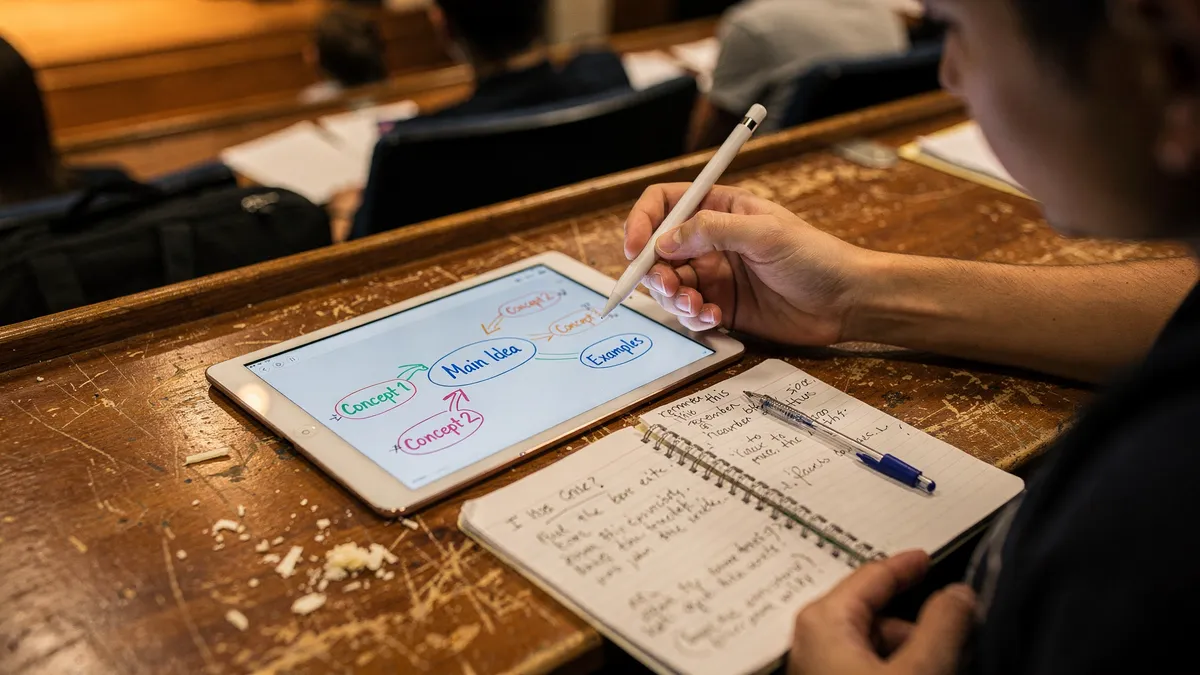
3 Take brief notes - Write a one-sentence summary of what you read to move the information from short-term to long-term memory.
Pro Tip: Read with a pen in hand to underline key concepts. This active engagement forces your brain to evaluate the importance of each sentence rather than passively skimming the page.
Buying Your Attention Back
Your attention is being sold to the highest bidder every day, but a simple daily reading habit allows you to buy it back. Focus on consistency over volume to rebuild your cognitive stamina and improve your learning speed. Start tonight with ten pages and keep your phone in a separate room. You will feel the difference in your mental clarity within a week.